Understanding Basic Terms.
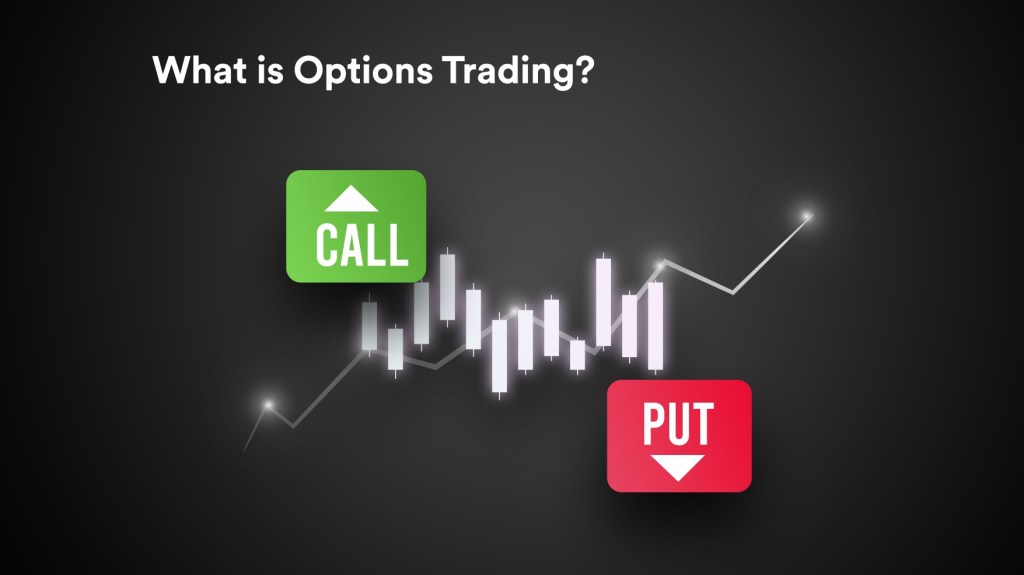
Option contracts are financial instruments used in trading that give the buyer the right, but not the obligation, to buy or sell an underlying asset at a predetermined price within a specified period. There are two main types of option contracts,
- Call Options: These give the holder the right to buy the underlying asset at a specified price, known as the strike price, before the option expires. Traders purchase call options when they expect the price of the underlying asset to rise.
- Put Options: These give the holder the right to sell the underlying asset at the strike price before the option expires. Traders purchase put options when they expect the price of the underlying asset to fall.
For example.

Here, RELIANCE JUL 3100 CE and RELIANCE JUL 3100 PE are the option contract for which RELIANCE is an underlying asset.
Understanding the terminology of an option.
Let’s decode the Option Contracts from the above example of RELIANCE,
RELIANCE:Underlying asset. This is the security for which you get a right to buy or sellJUL:Date of expiry (end of JULY in this case). On this date, your option contract expires3100:Strike price. It is a price at which you get a right to buy or sell, i.e. you can buyRELIANCEat 3100 in case of a call option or sellRELIANCEat 3100 in case of a put optionCE:Call European (Call option). Right to buyPE:Put European (Put option). Right to sell65.00:Premium of a Call option. Cost for owning right of call option41.40:Premium of a Put option. Cost for owning right of put option3110.30:Spot price. The price at which Reliance is trading- Lot size: Number of shares which are covered under a contract. In the case of reliance, it is 250 shares per contract (As of 23rd July 2024)
- Exercising: Using your right to buy/sell of underlying
Estimating the value of premiums.
Let’s say RELIANCE is trading at 3110 for simplicity in calculations.
- If we are going to exercise
RELIANCEtoday, then - In case of a call, you use your right to buy
250shares of reliance at a3100 - As
RELIANCEis trading at3110and yourCEgives you the right to buyRELIANCEat3100, you are getting reliance shares atINR 10cheaper than the market price - This
INR 10is known as Intrinsic value. But the option is worthINR 65, so 65 – 10 = 55 is a time value - On the other hand,
PEgives you the right to sell at3100where the market price is3110. Here the market price is higher than the strike price, so the intrinsic value of the put is 0. And 41.4 – 0 = 41.0 is an extrinsic value
So intrinsic value is the profit you get by exercising your options. Time value is an expected movement in an underlying till expiry.
Based on this can you imagine that the time value will get 0 on the date of expiry? If reliance stays at 3110 only till the date of expiry. Then CE will have a premium of 10 and PE will have a premium of 0.
Such options which have intrinsic value are known as “IN THE MONEY”/ITM and which only have extrinsic value are known as “OUT OF THE MONEY”/OTM options. Options which have a strike price closer to the spot price are known as “AT THE MONEY”/ATM.
Oh wait, did I forget to tell you that options can exist at multiple strike prices? Obviously yes! Because options are just a contract, and bets can be made on different strike prices too. More on this in the next chapter!
TL;DR.
Generated using AI
- Option Contracts: Financial instruments giving the buyer the right, but not the obligation, to buy or sell an asset at a set price within a specified period.
- Call and Put Options: Call options allow buying an asset at a strike price, while put options allow selling at the strike price.
- Example Explained: RELIANCE JUL 3100 CE/PE options where RELIANCE is the underlying asset, JUL is the expiry month, and 3100 is the strike price.
- Intrinsic vs. Extrinsic Value: Intrinsic value is the profit from exercising an option, while time value represents the expected movement of the underlying asset until expiry.
- Option Types: “In the Money” (ITM) options have intrinsic value, “Out of the Money” (OTM) options only have extrinsic value, and “At the Money” (ATM) options have a strike price close to the spot price.












 Not Rocket Science!
Leave a comment