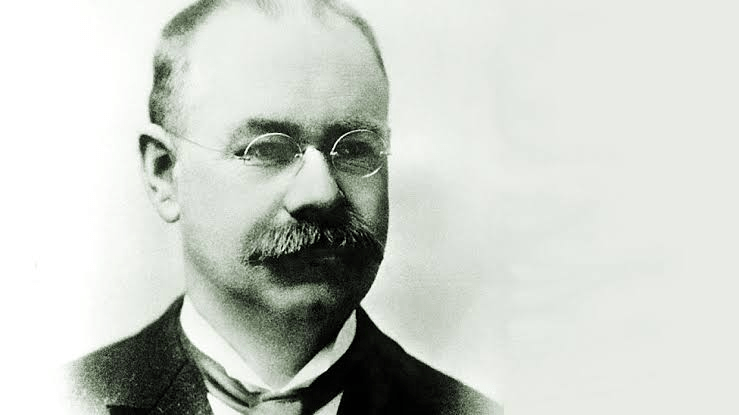
The idea of a programmable computer was a distant dream but the American dream was becoming a reality. America was on its way to becoming the world’s greatest industrial power and opened its arms to immigrants from other lands. In the second half of the 19th century America’s population increased 35% each decade America’s exploding population began to endanger one of its great institutions. The American census, the census which is required by the constitution to be held every 10 years was still being done by old-fashioned people with mark-making checkmarks on pieces of paper and it simply couldn’t keep up with the tremendous surge of population in the US. The crisis reached a head in 1887, the Census Bureau was still hand tallying the data from the 1880 census, desperate for relief the Bureau pleaded for any method that could speed up the counting of the 1890 census. The superintendent of the census had proposals for three systems so he decided to stage a contest. Two of the systems relied on hand counting, the third developed by a young rather humorless former MIT instructor named Herman Hollerith used punched cards. Punch cards would one day become the standard method of feeding high volumes of data into computers, now where he got this idea we are not sure. He may have been inspired by the fact that a conductor on a railroad punches your ticket when you hand it to him, the system beat the others easily in the tabulation portion of the test, it was nearly ten times faster.

The Census Bureau leased 56 of Hollerith’s machines at $1000 a year each and put them to work. In July 1890 census bureau clerks used Hollerith’s machine to punch the cards and then tabulate the results. Scores of operators were trained to use the puncher quickly and accurately, the tabulating was done with electricity a metal pin that passed through a card hole made electrical contact with a cup of mercury completing a circuit that was registered on a tallying device that consisted of rows of clock like dials. Hollerith’s machines were a step toward the later development of computers. They significantly sped up the processing of information, the results of the 1890 census count were a triumph for Hollerith, in just six weeks the population count of 62 million six hundred and twenty-two thousand two hundred fifty was tallied Hollerith became the talk of the scientific community he rented an office and set himself up in business he called his new enterprise the tabulating machine company. Hollerith had the Census Bureau business in his pocket and the future looked bright but it turned out to be harder than it seemed. Hollerith’s natural aptitude for mechanical devices was obvious but he also proved himself to be a dogged businessman. He drummed up business among one of the biggest industries of the day, the railroads. With the increase in population in the west, the railroads had grown into enormous organizations with personnel stations cars and customers scattered all across the country. Hundreds of clerks produce tons of paper to help track and manage these vast empires. Hollerith convinced the New York Central Railroad to try out some of his machines, the experiment wasn’t a success. His machines could compute fast enough for census work but couldn’t keep up with the speed and the railroad business. After three months the machines were removed, Hollerith was short on capital and faced ruin. He moved his family into his mother-in-law’s house, he sold his assets even his horse to raise money to redesign his machines, to improve their speed reliability and ability to make additions. Hollerith even customized the punch cards for business computations such as adding columns to store dollars and cents. After a solid year of tedious work Hollerith returned to the new york central and offered them free use of his new improved and faster computing machines for a year within three months the railroad was convinced and contracted to lease the machines. His machine company was back on track, Hollerith had avoided bankruptcy and now had more work than he could handle and Hollerith you could say came along just in time. It was a combination of his invention making this available but also the need out there required something like that so it was a convergence of the social needs or the social factors on the one hand and the inventiveness sort of pushing from the other hand but Hollerith was weary, he was diagnosed with a bad heart. In order to slow down in 1911 Hollerith sold his shares in his company for over $1,000,000. Hollerith’s former company was merged with three others and led by master salesman Thomas Watson, grew into a major supplier of business equipment.
In 1924 Watson renamed the enterprise International Business Machines(IBM). Because of Hollerith the name IBM would become synonymous with computers. By the 1930s as America limped out of the Great Depression, companies like Burroughs and IBM foresaw continued growth and success over the next decade, progress would be slow, it would take the destructive forces of world war two to give the computer its next great advance.











 Not Rocket Science!
Leave a comment