World War two spurred the development of the true computer and in the turbulent days before the German blitzkrieg smashed Poland, a young Polish engineer walked into the British Embassy in Warsaw and made an astounding proposition he offered to sell the British the secret to the unbreakable German code machine, the Enigma. The British desperately wanted to crack the Enigma machine used by German commanders to encrypt their most secret military radio messages. Radio is a wonderful piece of technology but the very beauty of radio the fact that you broadcast messages out makes it very bad for military traffic because the enemy can read your messages as well as the person you intended to read, so you encrypt the message. British intelligence supplied the engineer with a fake diplomatic passport and smuggled him out of Warsaw while guarded by French agents in Paris, the engineer provided details on the code machines. Ingenious operation in the Enigma plugs were rearranged to conform to that day’s code book combination, the power of enigma was that this plug arrangement constantly varied how letters were coded throughout a transmission, the number of letter variations was astronomical. So high the Germans considered their code machine to be unbreakable, but the British now knew how the machine worked they realized that they could very quickly try different key combinations on a small part of the code, then when that small part was broken and the key revealed the rest could be decoded effortlessly. North of London at a secret installation in Bletchley Park British codebreakers built a computer like machine to do just that, Collosus.
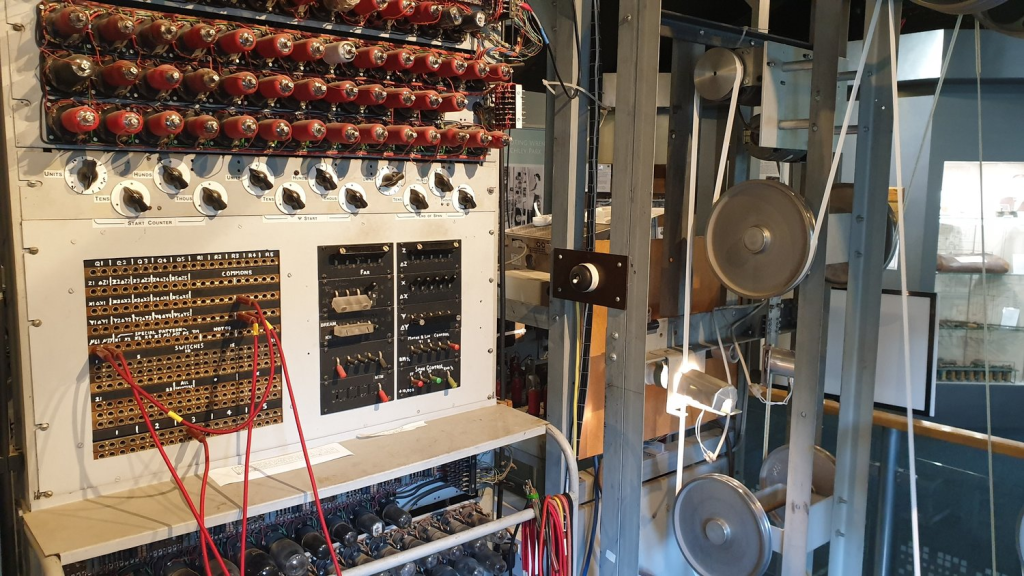
Colossus used over 2000 vacuum tubes(What are vacuum tubes? more on this later) to process 25,000 characters per second. Colossus could only do one job but it could compute very quickly it’s deciphered German transmissions were called the ultra secret. The most closely guarded secret of the war while the British were now able to read German messages the question was how to take advantage of the secrets without tipping off the Germans that their code had been compromised. The most senior Allied commanders were privy to ultra material but had to exercise caution in reacting to it so as not to tip their hand Ultra information was never revealed to anyone in a position to be captured by the enemy. Field commanders often went into battle lacking information on the enemy that was known to their superiors from ultra dispatches, this secrecy may have also kept Colossus from prominence in the history of computers while colossus was breaking german codes across the atlantic, another computational device was under construction, the machine which would directly influence the design of all future computers, was being built in Philadelphia in response to the attack on Pearl Harbor.
American industry quickly became a powerhouse producer of the implements of war. But by 1943 there was a critical shortage of a surprising component of the war machine, firing tables were artillery pieces. Firing tables allowed Gunners to correctly aim their guns in different ranges altitudes temperatures and wind conditions to calculate these tables required enormous numbers of calculations which at that time were done by human beings incidentally these people who did them were called computers, that was their job title and they operated adding machines. Mechanical adding machines primarily and they would simply step through these calculations and produce these tables. One of the Centers of firing table calculation was at the Moore School of Engineering at the University of Pennsylvania in Philadelphia. Midway through the war it became clear that the tables could not be produced fast enough, this was a crisis without tables new guns could not be shipped to the troops overseas. To break the bottleneck a Moore School physicist John motley made a fantastic proposal, he suggested that he could build a giant electronic computer that would be able to figure a single trajectory in 100 seconds. The army desperate for a device to help them win the war, reluctantly committed to the proposed cost of half a million dollars. Mock Lee and a brilliant graduate student in electrical engineering Presper Eckert. Set to work constructing ENIAC, the electronic numeric integrator and computer, driven by the knowledge that friends and relatives were dying in battle while they worked in Philadelphia. The team of young engineers toiled incessantly but could they create such a monster, everything had to be invented from from square one and then they had to build it and then they had to test it and they had to put it all together and make it work reliably and then they had to learn how to program it. Nothing close to ENIAC had ever been conceived nearly 100 feet long and weighing 30 tons it contained almost 70,000 resistors 10,000 capacitors 6,000 switches and 18,000 delicate vacuum tubes.
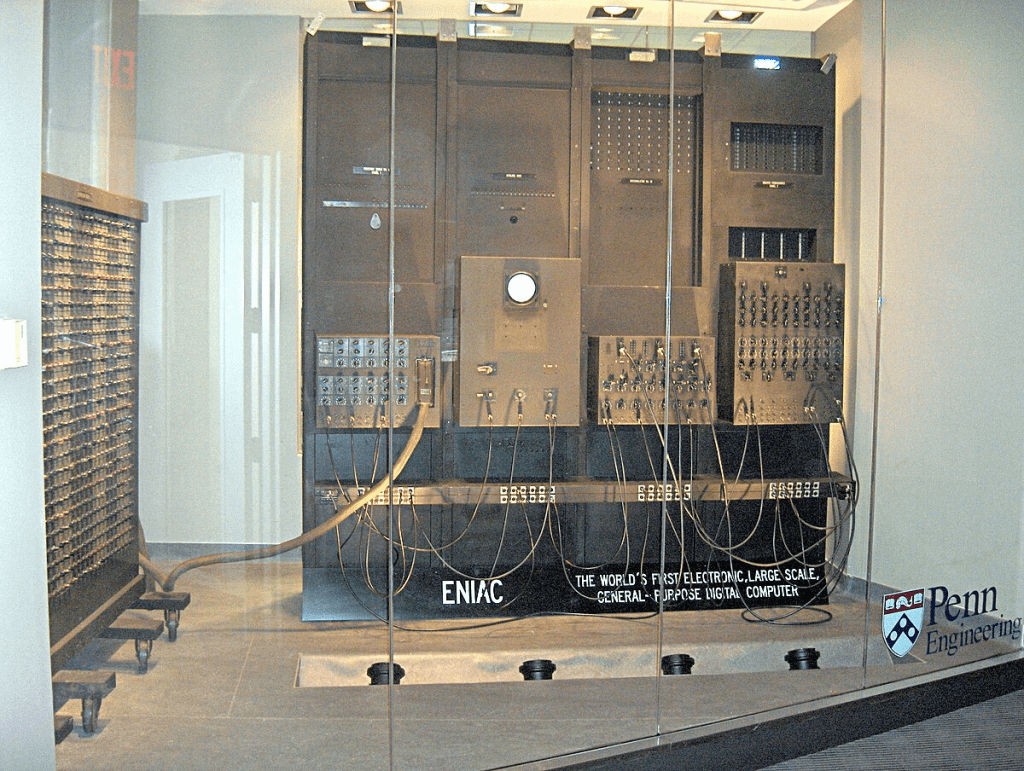
Vacuum tubes burn out just like lightbulbs. In a machine that contained 18,000 vacuum tubes it was likely that at least one would always be burned out crippling the Machine. Presper Eckert found the key to making it function. He had the vacuum tubes built to high tolerances, he critically tested them and then he ran them at low power if you took these measures you might be able to get the machine to work for 10 minutes half an hour at a time since the Machine calculated so quickly you can get a lot of work done in half hour and so that’s what happened after two years of intense work.











 Not Rocket Science!
Leave a comment