IBM had no computers, IBM’s aging leader the legendary sales guru Thomas Watson senior was not eager to jump into the enormously costly development of computers. Computer back then contained thousands of vacuum tubes, occupied you know one or more large room rooms and required a small army of attendants to run. IBM admit most other people didn’t see how computers could be used in business.
It took Watson’s son, Tom Watson jr. to lead IBM into the computer age as Watson himself recalls “the move was spurred by IBM’s customers who were fed up with bulky punch cards I remember particularly Jim maddened then privileged president of the Metropolitan Life who said we’re going to cancel our IBM just the minute we learn to do this in tapes because three floors of the Metropolitan Life Building are used to store the cards of our customers accounts and if we keep going the way we will they’ll occupy the whole building we were threatened into this progress faced with the prospect of losing customers”.
Tom Watson jr. ordered the development of a computer, IBM’s famous salesforce told their customers a computer would arrive soon in fact it was still being planned. Finally in 1953 IBM unveiled the 701 although technologically inferior to the UNIVAC, the 701 and other early IBM computers were hits with the customers because they conform to standard IBM systems and support. IBM saw the future and it was computers. They redirected corporate efforts to computer development. IBM’s efforts paid off and by the beginning of the 1960s the company’s large mainframe computers dominated the business but the development of the computer was about to go in an altogether different direction. We choose to go to the moon in this decade and do the other things not because they are easy but because they are hard. In 1961 America was trailing Russia in the race for space. 1961 a year of achievement for Soviet scientists in the race for space.
Yuri Gagarin has become the first human to orbit the earth and crowds in Moscow’s Red Square salute the 27 year old cosmonaut. As NASA engineers began planning the lunar mission they realized a computer as powerful as one currently the size of a room must be onboard, the engineers wondered is such a small computer even possible.
The first great breakthrough that would lead to computer miniaturization had already been made on December 23rd 1947 when three scientists at Bell Labs William Shockley, Walter Brattain and John Bardeen invented the transistor formed on the semiconductor silicon the transistor could replace large vacuum tubes in computers. Compared to vacuum tubes transistors were tiny, required little power and produced little heat. The breakthrough was sufficiently important that the three inventors of the transistor were awarded the Nobel Prize a computer that could navigate to the moon and back would require thousands of transistors and although small they were not nearly small enough. The next step in miniaturization occurred in 1959 when Robert Noyce and Jack Kilby engineers were rival transistor manufacturers independently came up with breakthroughs that led to the same revolutionary idea, an entire network of electronic components transistors diodes capacitors and resistors could be incorporated onto a single chip of silicon this great innovation in electronics was called the integrated circuit.

Using integrated circuits a 10-ounce computer was built that was as powerful as a 30-pound one made of transistors but integrated circuits had an inherent problem they were difficult to manufacture and therefore were expensive but the space race had started just in time to pay for them.
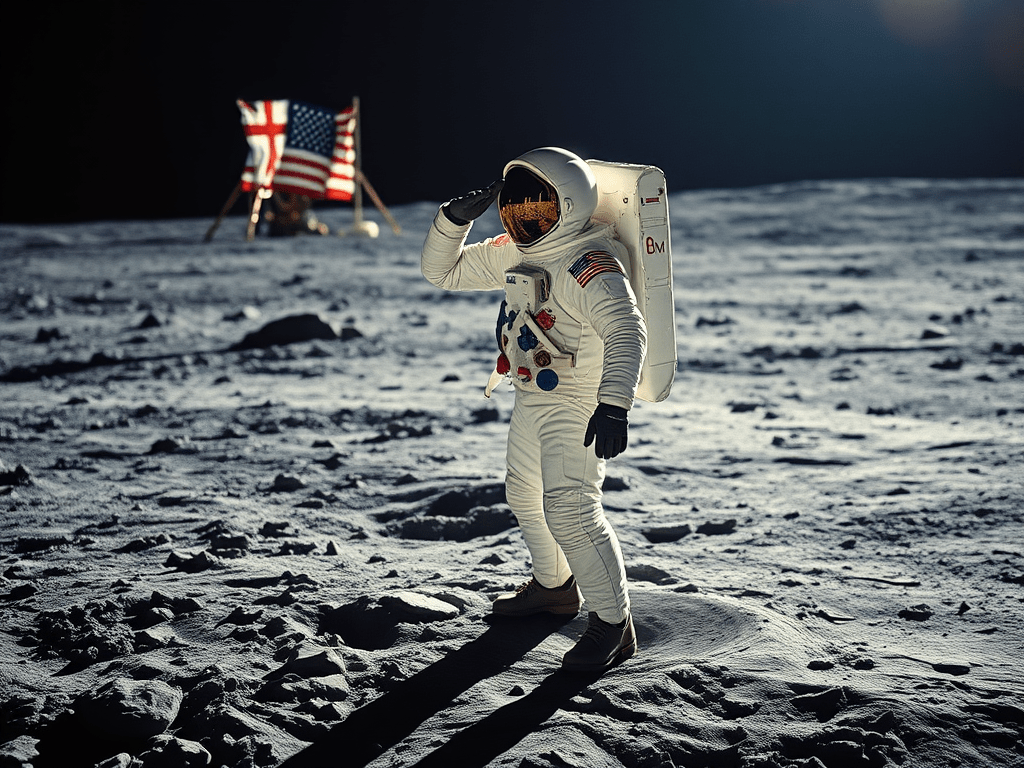
In 1969, 5000 integrated circuits made up the heart of each of two identical computers one on the lunar orbiter and one on the lander for their size these were the most powerful computers on earth soon to leave the earth. As Neil Armstrong took one small step in the lunar dust, Intel engineer Ted Hoff was making the last great leap in miniaturization developing an idea that would put an entire computer on a chip of silicon the microprocessor.
The genie would be out of its bottle beginning the computer revolution and changing the world forever.





 Not Rocket Science!
Leave a comment