So the title did it’s job and you have finally landed here to see the answer. Don’t worry, it is NOT the F word you might think it is.
Anyways, continuing the saga where we left you “floating” in our last article. Where we understood some of the fundamental physics of being underwater and why a body actually float with lungs filled with air.
Revisiting the Buoy Exercise.
Highlighting the major learnings from the former article suggested that a swimmer performing a buoy exercise underwater floats, as the resultant of the two counter acting force cancels each other effect and there is NO resultant force acting on the swimmer’s body. Hence it continues to do whatever it was doing, floating. Obviously, up to the point till the swimmer can hold his/her breath.
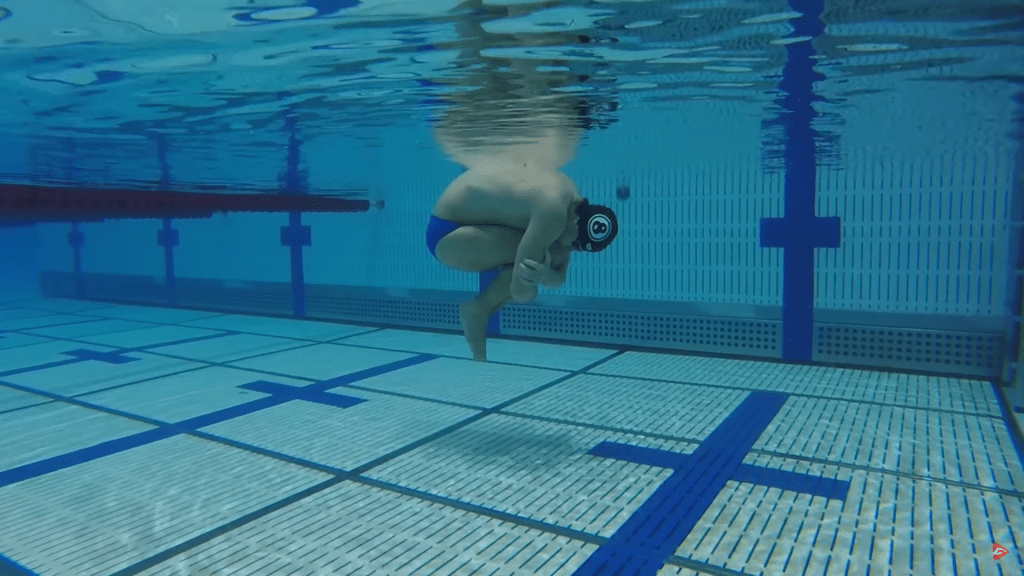
If we imagine what will happen if the swimmer decides to slowly and continuously exhale the air out of the lungs through the nose, for those you have already tried it, good job! For others here is the explanation, for a certain volume, the buoyancy force dominates the gravitational pull and you keep getting pushed up. Then comes a moment where you hang at still underwater, not getting pushed upwards, neither sinking down. This point is called the equilibrium state where the gravitational pull and buoyancy push on the swimmer’s body counterbalance each other. If “hanging in there” had a better face! Even a slightest exhaled volume of air from here will start to sink you down, and now you know why.
Bottom line there is NO resultant force on the swimmer’s body when he/she truly floats underwater.
How is space any different from this?
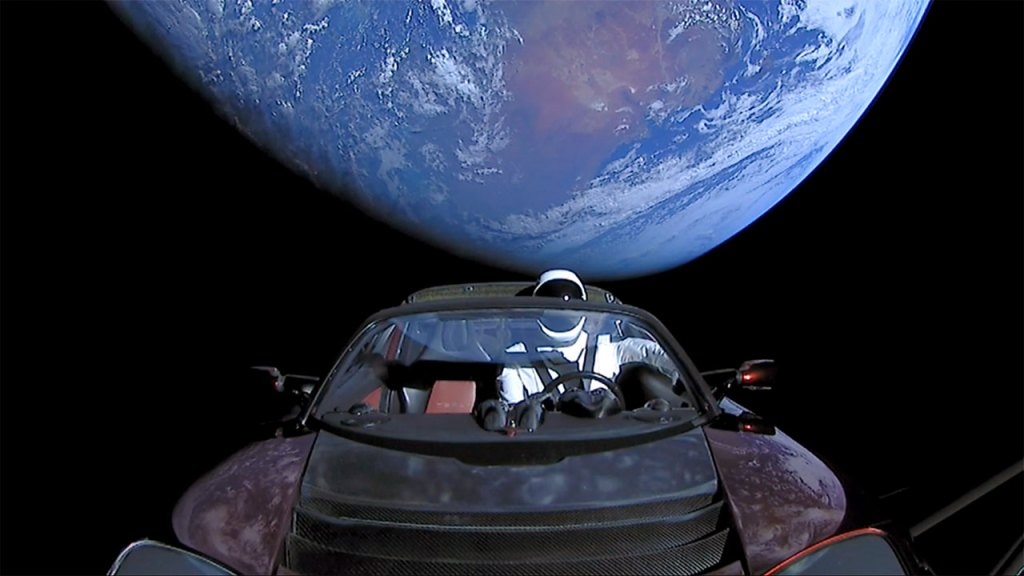
Now that we have the foundational knowledge clarified. One should be quick to notice that when an astronauts is revolving around the earth in just 90 minutes, there is ONLY a fundamental force making that happen. Any Guesses? It is an easy one. Yes, it is Gravitational Force from all the galactic bodies, but for simplicity, let’s assume there is only Earth. So it the gravitational force from Earth acting on the ISS and the astronauts inside and outside it.
You should not have any problem visualizing that there is NO other force acting on an isolated astronaut. And we have spent the last 1500 words understanding that for the resultant force to be zero (i.e. being in equilibrium), there has to be at least two opposite acting forces. So one thing MUST be clear that, in an inertial reference frame (what does that even mean?) the astronaut is NOT in equilibrium, hence NO “floating”.
Also there has to be a reason why the astronaut is able to revolve around the earth, the way planets do around the sun. And that reason is the gravitational pull of Earth, binding all of us together, how beautiful no?
How is an Astronaut similar to an unlucky painter?
Did you get the reference? It is amazing if you did, and congratulations you saved yourself 200 more words. Now you can sleep at ease. Isn’t it? Others, don’t worry fellas, I am with you, writing a blog for you all inside my office container at night like an owl.

Fundamentally, the unlucky painter from the famous imagination of Einstein and the modern day astronaut, they both are exposed to same gravitational pull (assuming there is no atmospheric drag on the painter). Though, the outcome will be very dramatically different in these two cases. One will happily enjoy the horizon of earth conducting some scientific experiment and the other will smash the ground and lose his/her life. At the end of the day, they both might be on the same news cover page though :p
More than the start and the end of the unlucky painter’s story, it is what happens between these two points in space time.
The “Fall”.
Finally, I can use the word. Pardon my behavior, but “Fall, Fall, Fall, Faaaaaaaaaaaaaaall”. Do you even know how hard it was to hold this for a long 2000 words!
Let me say it out loud first, Astronauts don’t “float” in the space, they continuously “fall” through the space. I feel better now.

Imagining what is going to happen to our unlucky painter is NOT that difficult. And allow me to help you in the case of the astronaut fella. You are getting pulled by the earth and if you didn’t have the speed of precisely 27,600 km/h, you might have already been crashed on the surface of earth or burnt away by the atmosphere of the Earth. So why is that not happening right now? Your speed is just ENOUGH to get away from falling into the Earth.
For clarity, if I ask you to thrown an apple from a building it will fall following a projectile motion, correct? Now let’s make it interesting, what will happen if you throw the apple with more speed, the distance it cover and finally crash into the ground will increase. Let’s take it one step further by assuming no atmospheric drag and you become HULK strong, you gather all your strength and throw the apple with all your might, the distance will significantly increase and there will be a time, when with the increase in the initial speed and apple will hit the earth on the exact opposite end of the Earth. Now things become interesting, any further increase in the initial speed and the apple might never touch the Earth again and return to your hands from the opposite end.

Does this make apple floating? Definitely, NOT. The apple is still falling under gravity, just not INTO gravity! Increase the height a little bit more and you have reached ISS and here is your answer, Astronauts are constantly “falling”, not “floating”!
Weightless is the feeling, this is what Albert Einstein thought imagining the unlucky painter falling from the rooftop. In his descend he would feel weightless and thus in his reference, he would feel “floating” but actually he would be “falling”.
“the happiest thought of my life”
Albert Einstein
And with this, it is time for me to “fall” asleep. Until next time. Keep eating an apple every day. Who knows HULK might throw your apple just to prove a point. Stay Healthy
TL;DR.
Generated using AI.
- Comparing Floating in Water and Space:
- In Water: Swimmers float when the upward buoyant force balances gravity; exhaling air reduces buoyancy and leads to sinking.
- In Space: Astronauts experience only Earth’s gravitational pull with no opposing force, so they aren’t in equilibrium like floating swimmers.
- Astronauts Are in Continuous Free Fall:
- Astronauts don’t actually float; they are constantly “falling” around Earth due to gravity while moving at high speeds, maintaining orbit.
- This mirrors Einstein’s thought experiment of a falling painter who feels weightless during free fall.
- Understanding Weightlessness:
- The sensation of weightlessness arises from free fall under gravity without any counteracting forces.
- Astronauts feel weightless because they are in a perpetual state of free fall, not because they’re floating.
- Conclusion:
- The article invites readers to rethink the idea of floating in space as continuous free fall and concludes with a playful nod to gravity and apples.







 Not Rocket Science!
Leave a comment