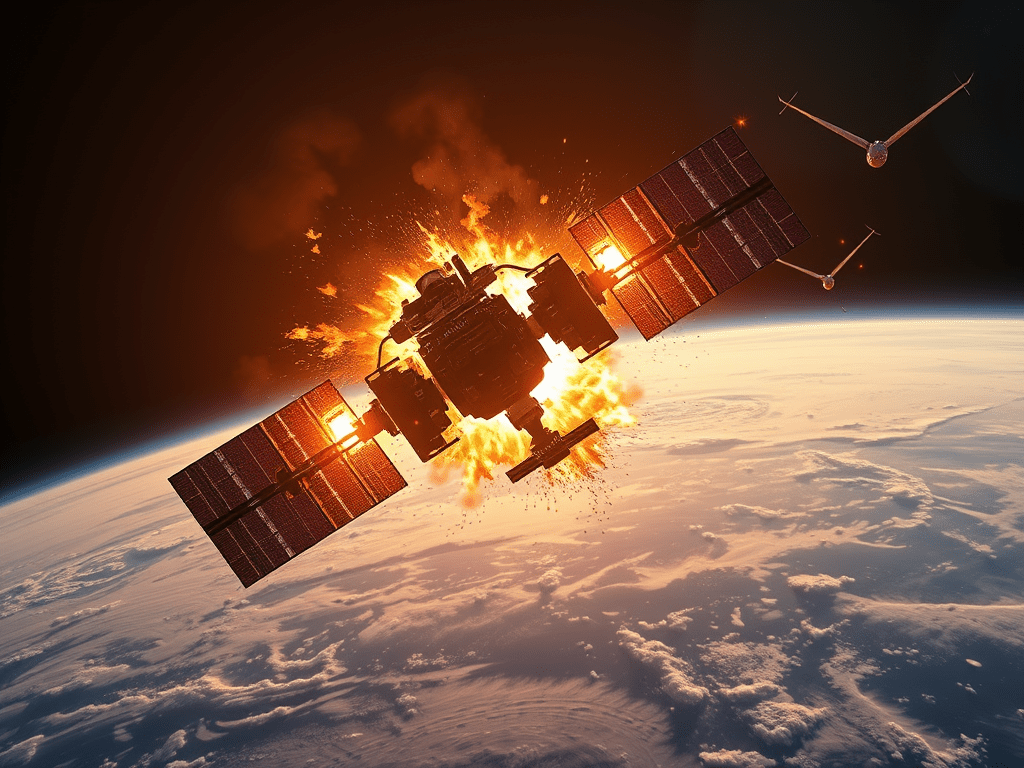
Well it could have been awesome if there was another “I” in “ISS”, present in title of this article. But anyways, life has its own ways. We are here talking about the much disheartening news I heard some time back, the fall of our only outpost in space, the International Space Station (ISS). This news has been particularly upsetting because, for a lot of young people, including me, visiting ISS and being able to see the curvature of the earth from space, where sun peeks from the horizon of the earth and lights up the space around, has been a dream.
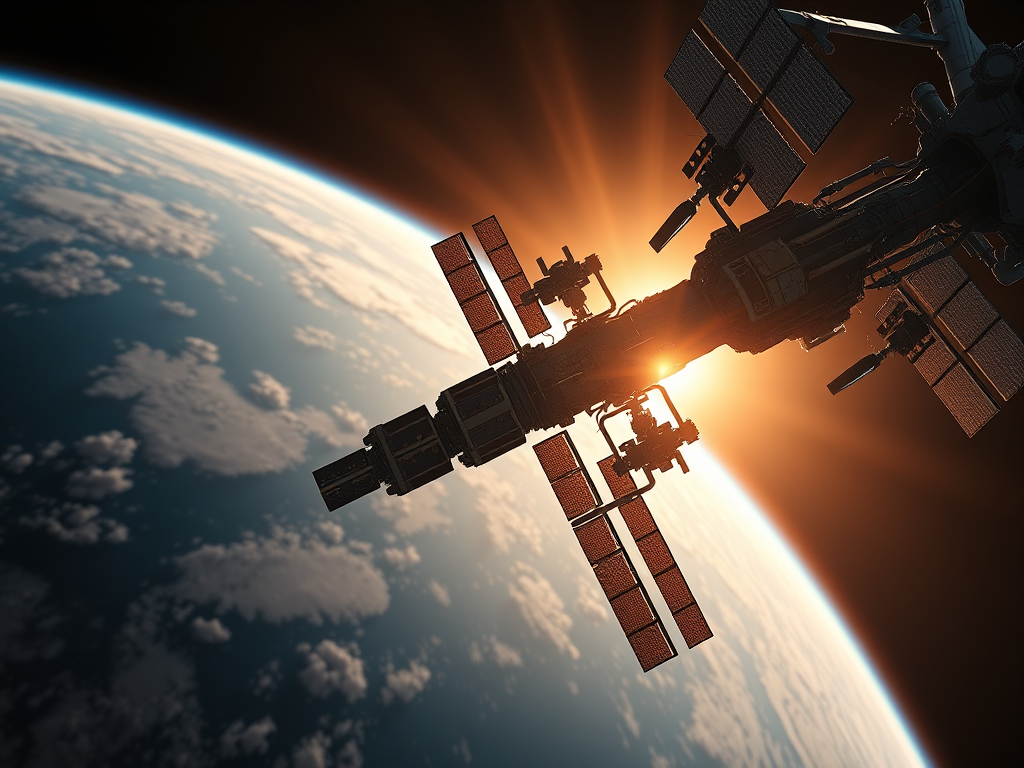
But why should anybody care about ISS in the first place, apart from it is in space? Well this brings us to our next section.
ISS: The Marvel
You see, the genesis of ISS is not only about the advancements in the space technology of the United States. Whether or not it was celebrated as the human outpost in the space, the ISS is a massive deal because of the alliance and the cooperation it demanded at its birth.
Two former rivals, Soviet Union and the United Space from the historic space race, creating the International Space Station (ISS) alongside other space agencies like JAXA (Japan Aerospace Exploration Agency), ESA (European Space Agency), and CSA (Canadian Space Agency) is a living proof of the power in international partnership in overcoming past conflicts for a common goal. Truth be told, in 1998 thinking about this project coming from any individual Space agency might have been just a fairy dream. But with collaborative efforts (Really? We will figure it out) from two space exploration giants and the supporting roles from other agencies made it fairy dream come true!
For a lot of people the ISS might only be an empty tin can revolving (or “falling”?) around earth in some orbit resulted from the gravitation pull of the planet. But what only a small section of people know is, the ISS doesn’t merely act as the human space outpost, but it is an importance platform for pioneering space research. It is a cutting-edge lab where cool people, whom we call scientists, explore astronomy, biology, physics, and more, leading to advancements like improved spacecraft fuel models and pharmaceutical developments. Ultimately strengthening our knowledge to advance human space flights and the explore the never ending black ocean, starting with our red neighbor, the Mars!
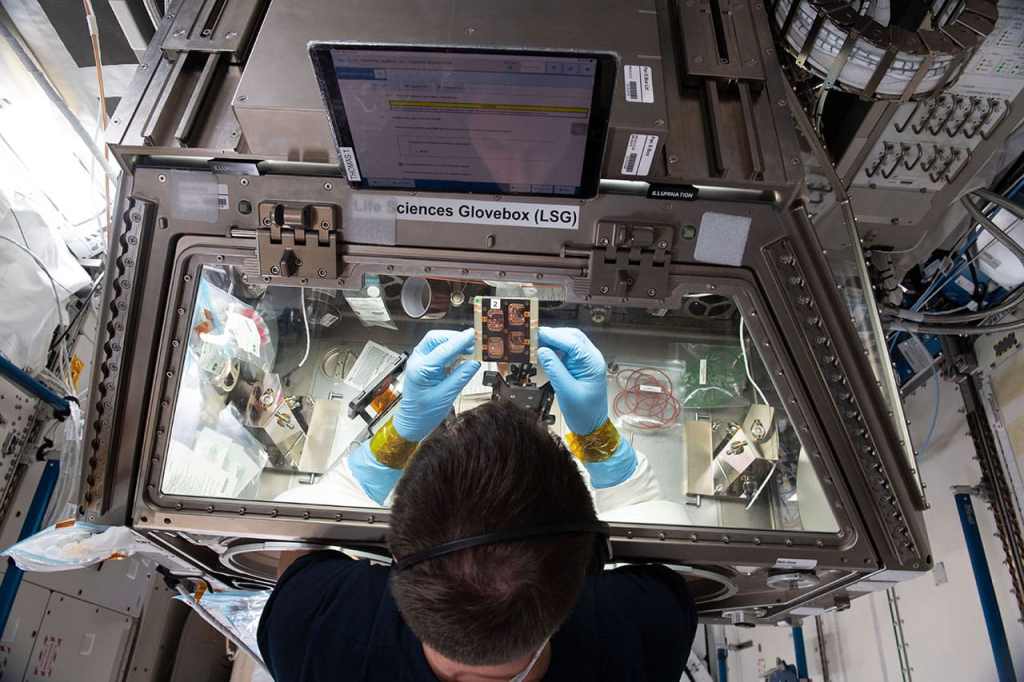
Not only space technology, but advancements in Human Health and Medicine is something to take a note of. The microgravity environment of the ISS allows researchers to study the effects of space travel on the human body, such as muscle atrophy (weakening of muscles) and bone density loss. This research is crucial not only for the future of space exploration but also has significant implications for medical science on Earth, particularly for the elderly and bedridden patients. Additionally, the ISS has facilitated the development of the portable ultrasound, which has become a critical tool in emergency and rural medicine.
So why the fall of ISS?
Once a symbol of international collaboration and scientific achievement, the ISS is in discussion for decommissioning due to several reasons for a long time now, primarily revolving around its aging infrastructure and the evolving goals of global space exploration. The ISS was originally expected to be in operation for about 15 years and we are already 10 year post its original expiry. However, its mission has been impressively extended due to its continued value in research and international cooperation. As the station approaches over two decades in service, the wear and tear from the harsh environment of space have started to show, raising concerns about safety and the cost of maintenance.
The harsh conditions of outer space, including extreme temperature fluctuations, micrometeoroid impacts, and exposure to cosmic radiation, have gradually degraded the station’s systems and structures. As these systems age, the risk of critical failures increases, which could potentially endanger the lives of astronauts aboard. Moreover, maintaining and repairing the ISS is extraordinarily expensive. The cost of sending up replacement parts and crews for repair missions competes with the budgets needed for newer, more advanced space exploration projects.
Financial considerations also play a significant role in the decision to decommission the ISS. Space agencies are looking towards the future, where the focus is shifting towards deeper space missions, including potential manned missions to Mars and the Moon. Funding these ambitious projects necessitates reallocating resources currently spent on the ISS. Additionally, there is a growing interest in commercial space stations developed by private companies, which promise more cost-effective solutions for low Earth orbit habitation and research.
In response to these factors, NASA and its international partners have laid plans to safely decommission the ISS, potentially by the late 2020s or early 2030s. The strategy involves deorbiting the station, where it will enter Earth’s atmosphere and disintegrate, with remnants falling into a remote part of the Pacific Ocean.
Why not bring the ISS down as memento?
Simply put, the ISS was only designed to be assembled in space and NOT disassembled, because obviously, handling bolts here-and-there even on a desk sized setup seems tiring to me, imagine doing that inside a swimming pool without goggles assembling a football field sized laboratory. So one thing is clear, we can’t de-module the ISS.
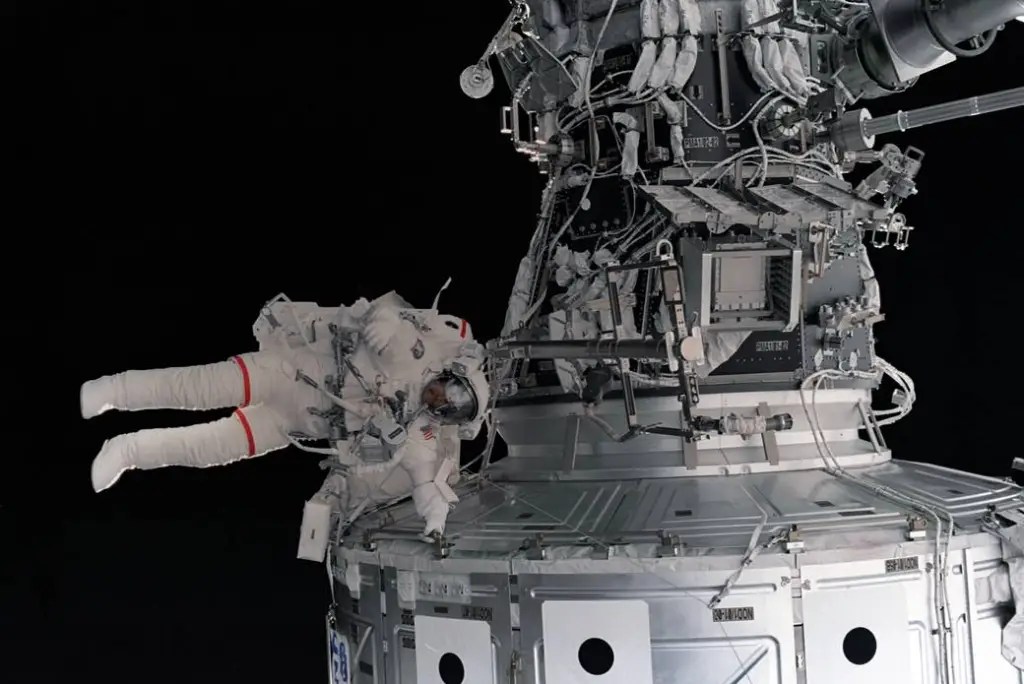
Then why not deorbit it as it is? Valid Question. Though, how will we modulate such a massive architectural mammoth falling uncontrollably? I am getting a feel that I remember this from somewhere. Where was it from?! Aha! Got it! The Chicxulub Impactor!

TL;DR.
Generated using AI
- Emotional and Practical Impact: News of the ISS’s potential decommissioning is unsettling for many, especially those who dreamed of seeing Earth from space.
- Significance: Represents a landmark in international cooperation in space, involving major space agencies like NASA, Roscosmos, JAXA, ESA, and CSA.
- Scientific Contributions: Has facilitated crucial research across various scientific disciplines, impacting space travel and medical sciences on Earth.
- Aging and Costs: The ISS is beyond its expected lifespan, with rising maintenance costs and safety concerns due to aging infrastructure.
- Future Focus: Shifting priorities towards deeper space missions and the emergence of commercial space stations are influencing decisions to reallocate funding.
- Decommissioning Strategy: Plans include safely deorbiting the ISS to disintegrate over a remote part of the Pacific Ocean by the late 2020s or early 2030s.






 Not Rocket Science!
Leave a comment