
Yes, you heard us right! We are going to bounce off lasers from the moon in this article, and understand what implications it brings along with itself. And before I just start and get lost in this exciting topic at hand which always fascinate me, I would like to tell why this topic even matters and where the inspiration to cover this came from.
“I was wrong. Penny can do better.”
If you have spend some time with me, you would have known that I am not a movie or a series kind of person. I don’t relate to a lot of trending and fancy TV series everybody talk about, but they is just one series which I can watch ‘N’ number of times. Be it a challenging day at work or college, or I am feeling down or happy, this is just one series which makes me feel better. This series makes me laugh and keeps me engaged and curious about the things that are going to happen, and obviously, in a scientific way. Have you guessed the name of the series by now?

The series I am talking about is non other than the Big Bang theory! Talking about my favorite character, I know a lot of people don’t like it when I say, “Howard Wolowitz is my favorite character from BBT”. They always ask, “But Why?” Which you might also be asking this very moment. Well, it is NOT very hard to guess, it is simply because he resembles a lot of us, stupid engineers, who wants to build stuff for space, even if that means designing a space toilet for International Space Station (ISS). And YES! we do want to play with the Mars Rover up there. Just NOT get it caught or broken just to show off in front of a stranger.
While watching Episode 23 of Season 3 of BBT for the first time I didn’t pay much attention to it, but it was only after when I joined this new company and I was exploring the orbital missions. One thing led to another and I found myself looking at the lunar ranging experiment conducted by NASA and all other observatories around the globe. Something “clicked”, the very scene from S3E23.
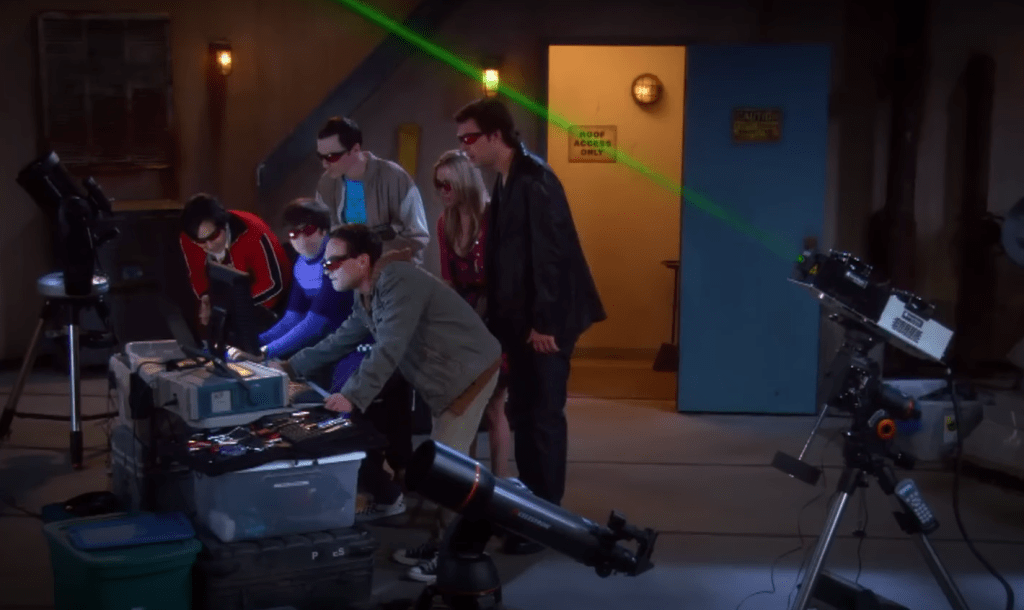
I quickly connected it to this episode where Leonard, Sheldon, Howard, and Raj are setting up an experiment on the rooftop of their building. It can be seen that they have kept a laser emitter, photo multiplier and the data acquisition systems hooked up to a laptop in their attempt to perform the lunar ranging experiment by themselves. This is when penny and his then-current boyfriend, Zack, tag along with our PhDs (except the one!) while conducting this experiment. Leonard warmly explains to them what are they trying to do.
I cannot explain it better by myself, so please have a look at the original.
“Think about what it Represents!”
The beauty of this entire experiment it beautifully narrated by Leonard when Zack showed dissatisfaction with the outcome of the experiment and having just some lines show up on the laptop screen. He didn’t understand why all four of them were jumping in excitement by looking at the some lines.
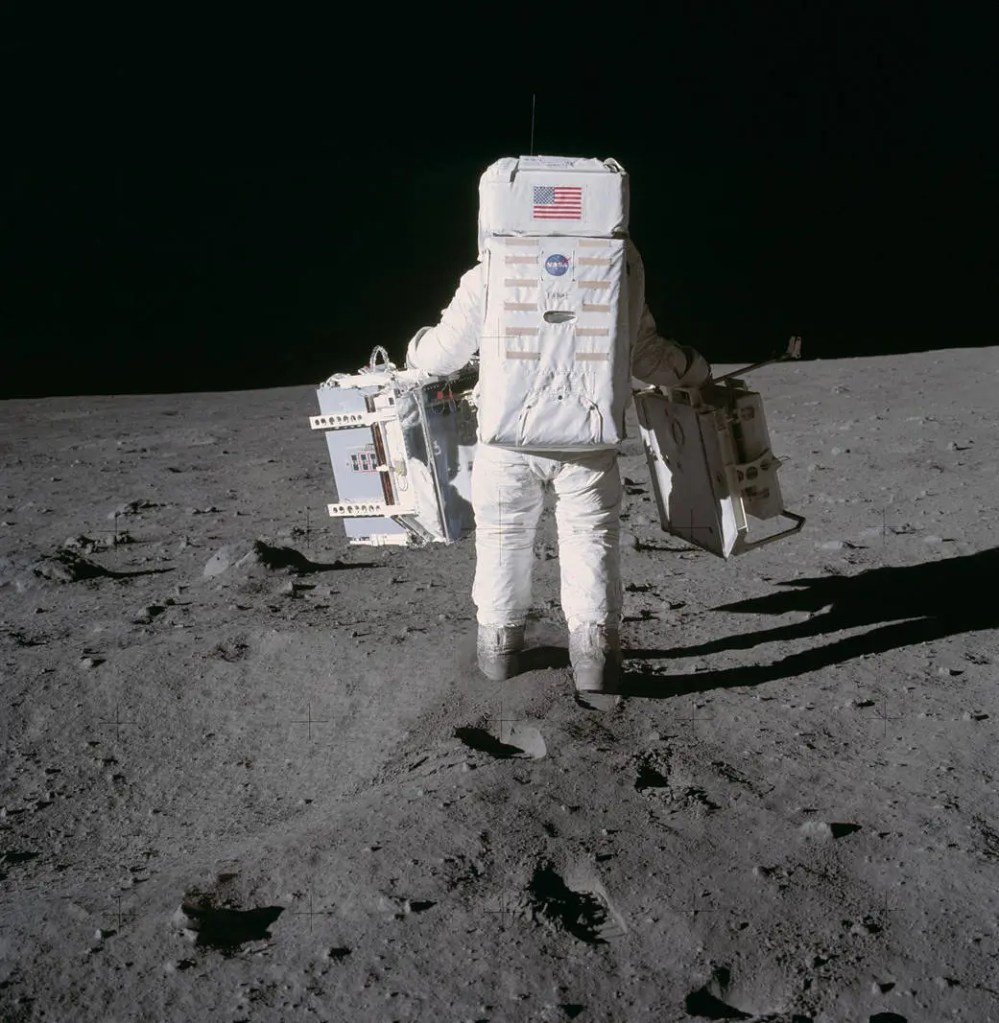
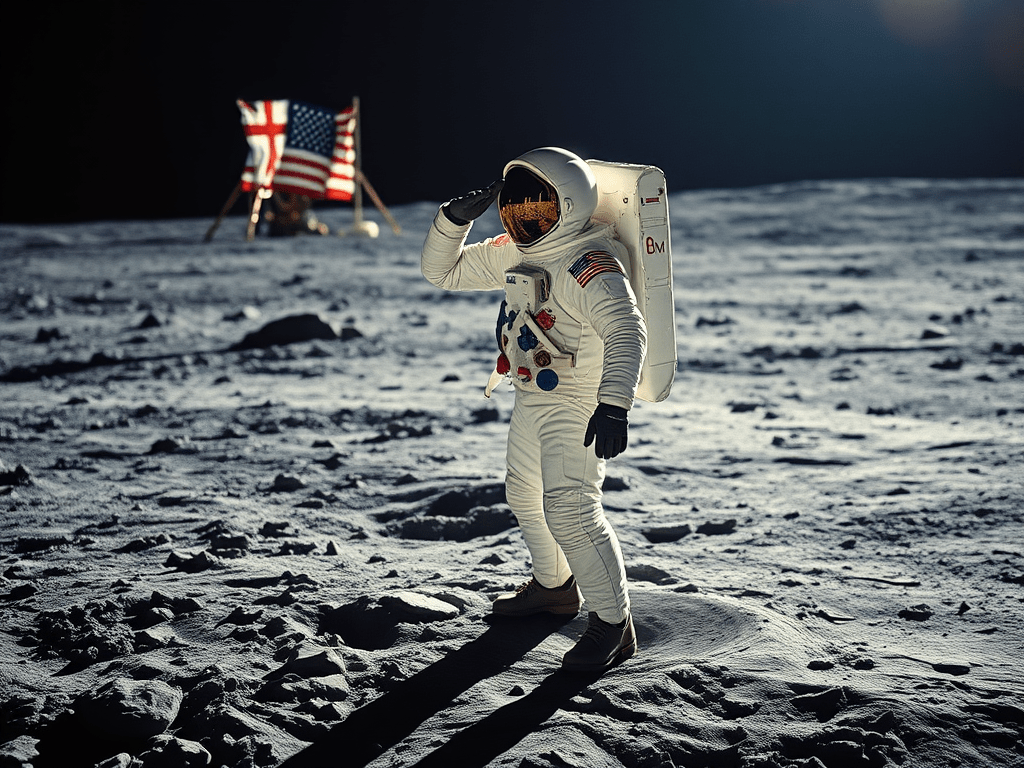
Leonard explains it to him that it NOT about having some two line on the monitor, but about what these lines actually represent! It definitely testifies that there exists a man-made object on the surface of the moon which is reflecting off the laser we sent earlier. This reflector placement on moon can only be done by the astronauts of Apollo 11, Buzz Aldrin and Neel Armstrong. This evidence further disproves the conspiracy theory that a lot of other space agencies and individuals seem to have, disproving that Apollo 11 ever landed on moon. But now YOU know, what to say to these guys!
And how does these two lines represent the Moon?
Good Question! Now, if you look closely in the video, you can see that when they shoot the laser in pulsed fashion, the photo-multiplier screen picks up the reflected laser (NOT shown in the scene) and gives the time difference between the event of sending off the laser, getting reflected from the reflectors on the moon and receiving it back on the photo-multiplier screen at the rooftop.
This is where Leonard shouts, the difference in time is 2.5 seconds! Which means it took the light from the laser 2.5 seconds to travel to-and-fro from earth to moon and back to earth. Now if we multiply it by the speed of light, which is 2,99,973 km/s in vacuum, we get 0.78 Million km. So that distance of moon from earth must be half of it, totaling around 0.38 Million km, which is exactly the distance between the Earth and the Moon.
And why is Lunar Ranging important?
Firstly, it is a definitive proof that there is a man made object placed on the surface of the moon, which further validated the Apollo moon landing, slashing all the controversies around it!
Secondly, the distance between the earth and the moon measured from the Lunar Ranging experiment is very accurate. Thanks to the advanced data processing methods, the ever advancing laser technology, and the photo multipliers performance, we are now able to get an accuracy of less than 1 cm while measuring this huge distance.
This enables the scientist to measure these distances over a long period of time and observe the changes. This close observation allows us to determine whether the moon is falling or drifting away from the Earth validating the Einstein’s Theory of General Relativity.

But it ain’t easy to reflect laser off the moon!
If you look at this concept, it may seem fairly straightforward. However, in practice, it raises many fundamental questions. If we don’t address these questions from the very beginning, it becomes difficult to fully understand the experiment.
For instance, I’ve wondered: how can we be sure that the laser and the reflectors on the Moon maintain the same relative positions between one measurement and the next? How do we know the Moon’s orbital parameters so precisely that when we bounce the laser off a reflector, we can measure the difference in distance with centimeter-level accuracy?
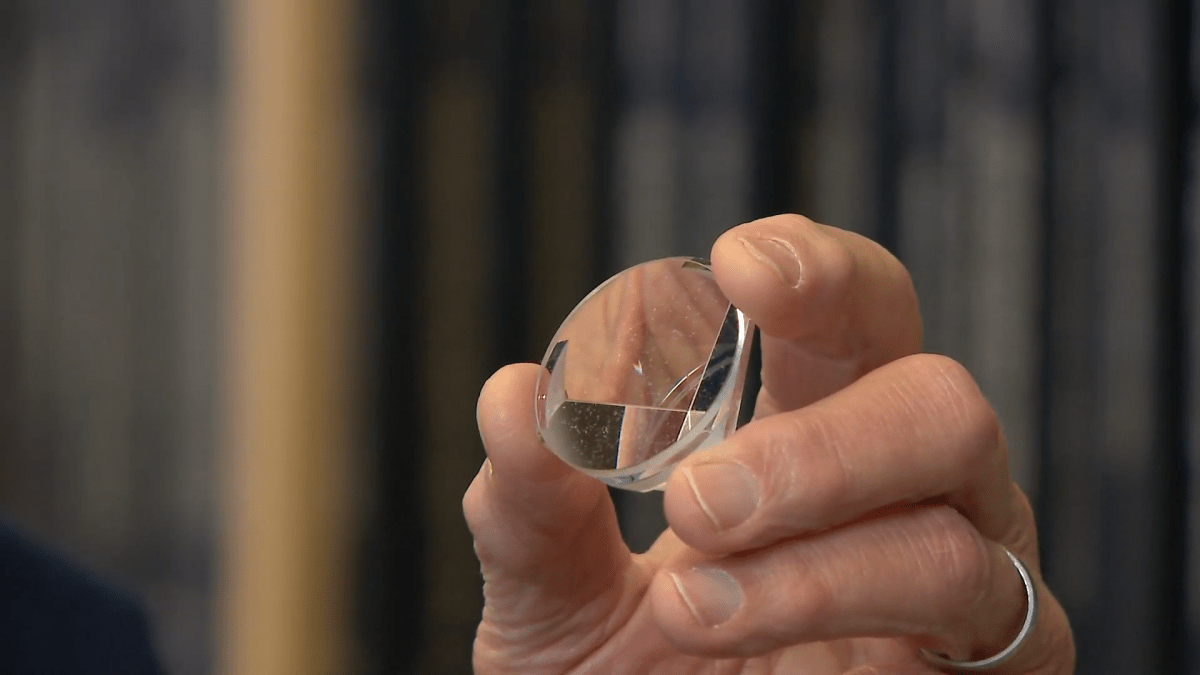
Another consideration is the behavior of the reflection itself. A mirror-like reflector will reflect a beam such that the angle of incidence equals the angle of reflection. But this doesn’t guarantee that the laser beam will return directly to Earth. To get the beam back, we must aim the laser perpendicularly at the reflector. How do we know when and where to position the laser so that it is perfectly aligned with the reflector’s surface?
All of this—timing, orbital parameters, alignment—has to be managed with incredible precision. You have to find the exact moment and location to ensure that the reflector sends the beam straight back. Achieving this perfect setup is close to impossible, so what do we actually do?
If these questions interest you, we will certainly dive deeper into them in the next articles.
TL;DR:
Generated using AI.
- Bouncing Lasers Off the Moon: The experiment involves sending a laser to the Moon’s surface and detecting its return to measure Earth–Moon distance.
- Historical Significance: The presence of man-made reflectors on the Moon, placed by Apollo 11 astronauts, provides direct evidence that humans landed there.
- Accurate Distance Measurement: Modern techniques allow measuring the Earth–Moon distance to within a centimeter, aiding research in orbital mechanics and gravitational physics.
- Validation of Physics Theories: Long-term distance measurements help validate Einstein’s theory of general relativity by tracking the Moon’s slight movements over time.
- Complexity of Setup: Ensuring the laser beam hits the reflectors at the correct angle and timing involves intricate calculations of lunar orbital parameters, precise alignment, and meticulous timing.









 Not Rocket Science!
Leave a comment