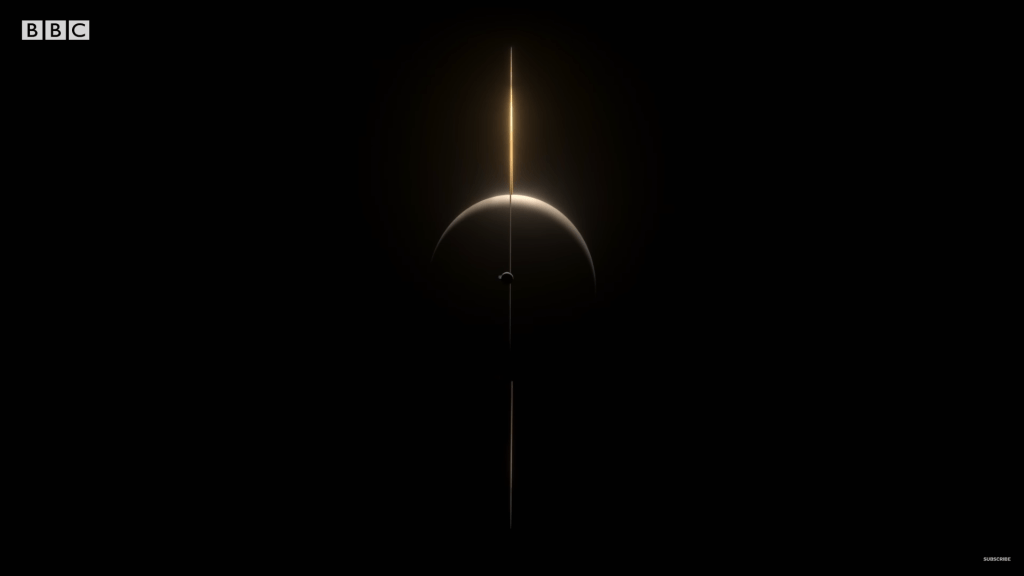
This is exactly the same question I was asked at my time when I was being interviewed by a team of IISc professors at KVPY examination. Back then I had no answer to this, and I forgot about it as well, until recently when I was going through the NASA website. The same question flashed in my mind, but this time I had the understanding to come to an answer by myself. And this is where I pose the same question to you, “Why in the world, Saturn has rings and Earth doesn’t?”
The Beauty.
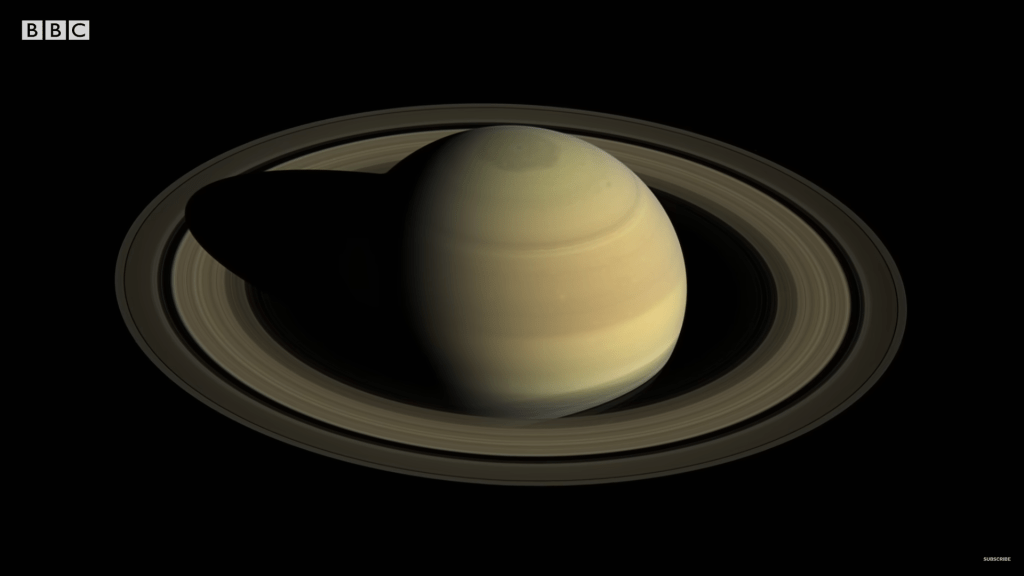
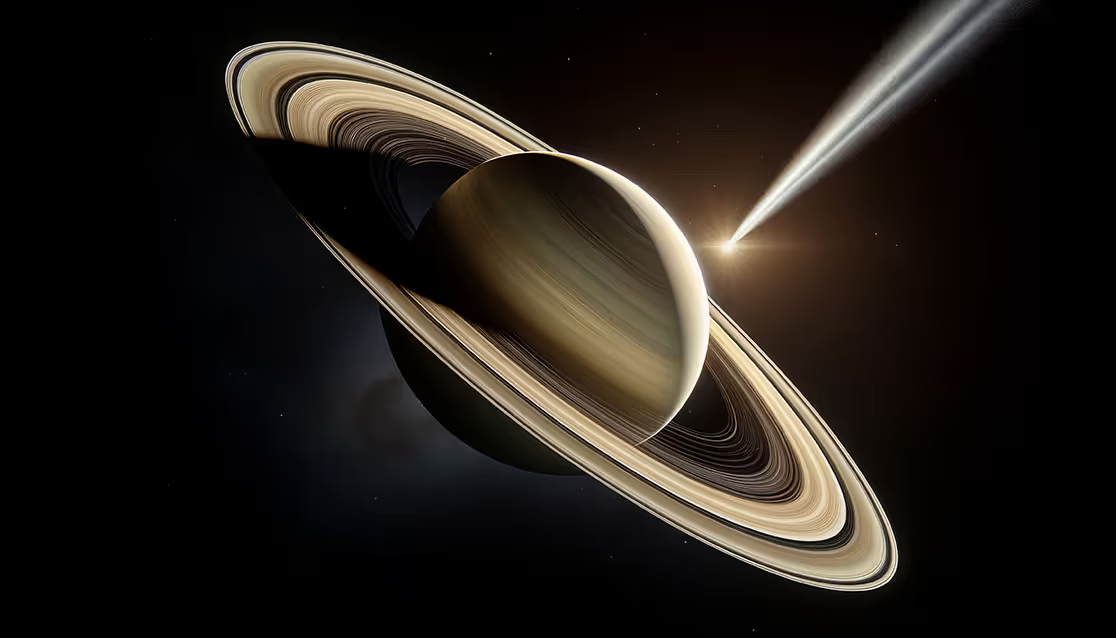
Saturn’s rings are one of the most iconic sights in our Solar System. Long before we sent spacecraft to the sixth planet from the Sun, early astronomers peaking through their modest telescopes were curious by the mysterious “ears” that seemed to stick out from Saturn’s sides. Today, with data from missions like NASA’s Cassini and Voyager, we have been able to see what these rings are really made of, speculate how they might have formed, and why they remain such a puzzle in planetary science
The rings around the Saturn is a perfect example of how complex planetary systems emerge from a combination of orbital mechanics, gravitational resonances, material properties, and ancient cosmic events. Let’s learn the current theories, insights from advanced scientific instruments, and fundamental physics that help us appreciate this cosmic beauty.
What Are Saturn’s Rings Made Of?
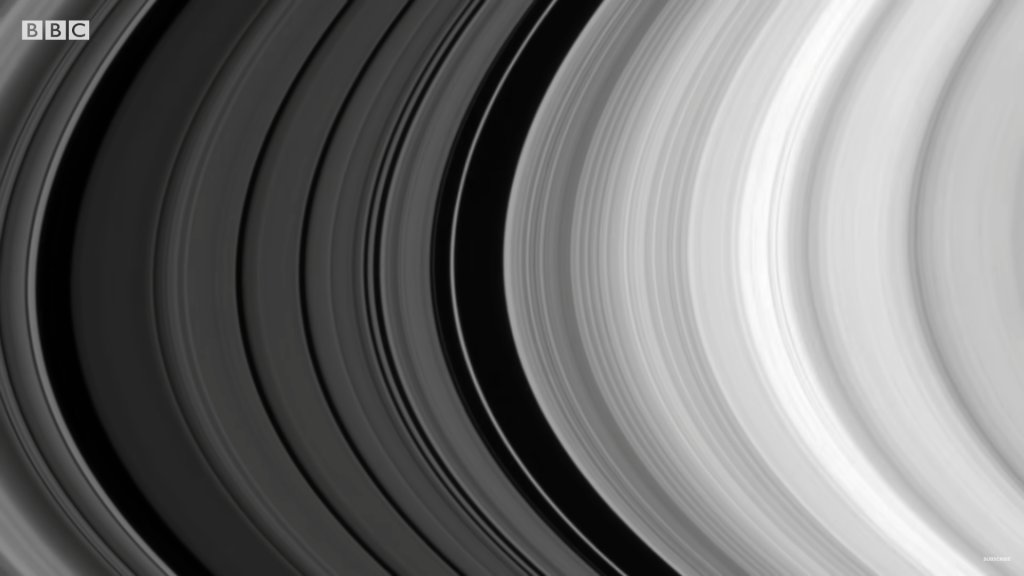
At first glance, Saturn’s rings appear as a continuous, flat disk. Up close, however, the rings are made of countless individual particles orbiting Saturn like tiny moons. The bulk of this material is water ice, often described as remarkably pure, with some additional darker contaminants such as silicate dust and organic compounds. Particle sizes vary from fine, dust-like grains to boulder-sized chunks.
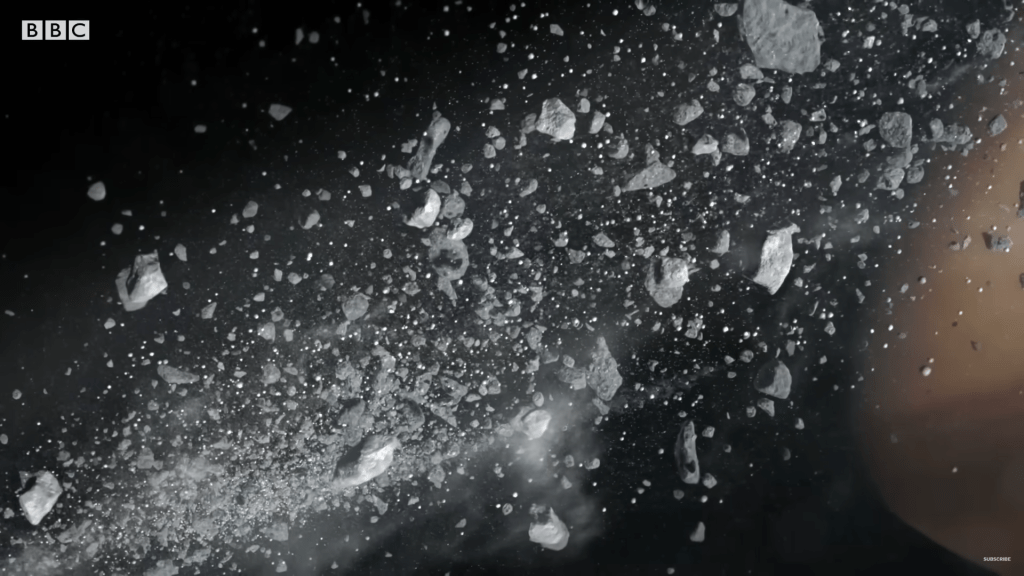
These particles obey Kepler’s laws, with inner rings revolving faster than outer ones. Collisions between particles are mostly gentle, maintaining the ring’s thin, flat shape over time.
Galileo’s Ears.
Galileo’s first telescopic observations of Saturn in 1610 left him kind of plucking his “ears”, he saw strange “ears” protruding from the planet, which he could not explain with his limited optics. It wasn’t until 1655 that Christiaan Huygens, using more advanced telescopes, correctly deduced that Saturn was surrounded by a thin, flat ring.
This historical progression is a testament to the power of improved engineering in observational astronomy. As telescopes advanced and eventually spacecraft were launched, our understanding of the rings deepened drastically. Missions like Voyager (1980–81) and Cassini (2004–2017) provided unprecedented data, transforming the mysterious “handles” into a well-characterized ring system.
But how did the rings form?
The origin of Saturn’s rings is still debated. Several leading theories have emerged. And please take a note that, the way scientific understanding progress is by you making an hypothesis with your best understanding of that time, then you design experiment to validate or disprove the hypothesis, if the results match to your predictions, you theorize it. What is my point? Several leading theories ARE important to get to the correct one!
Shattered Moons:
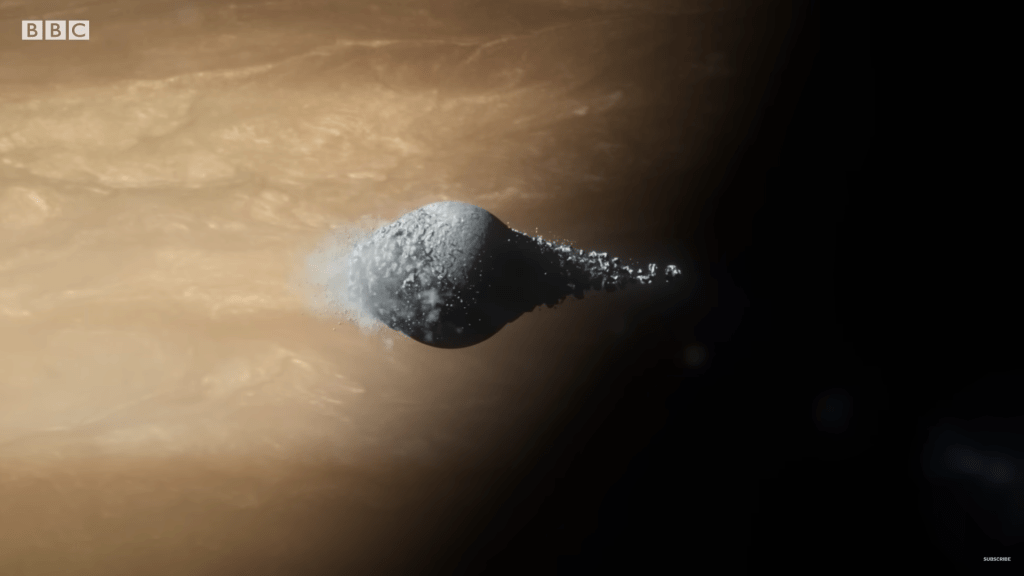
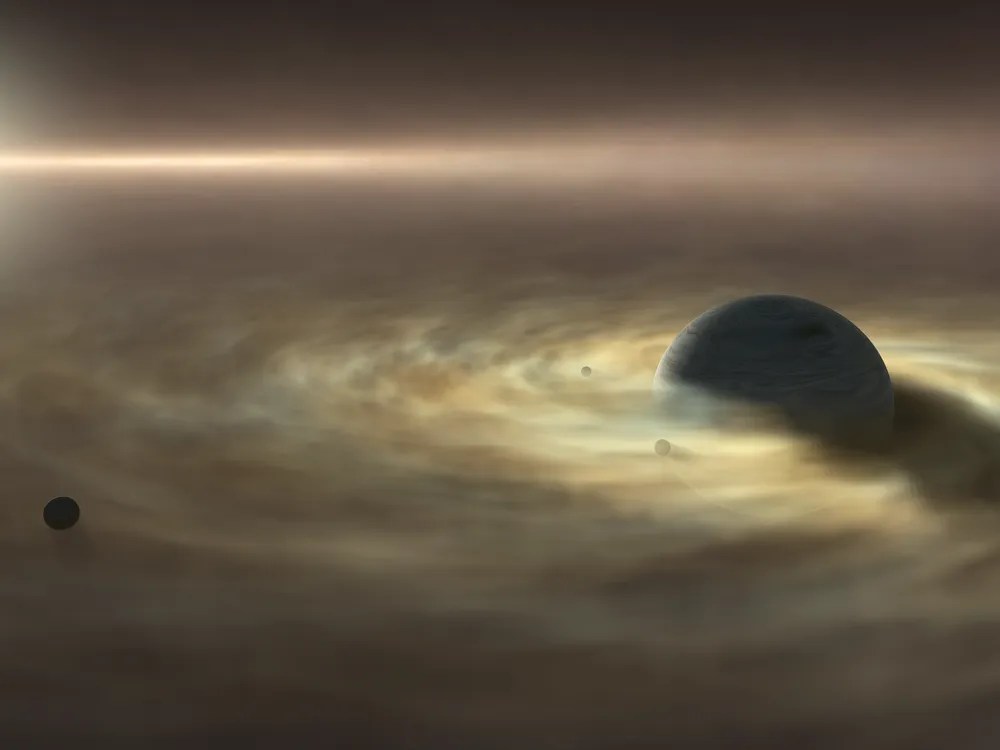
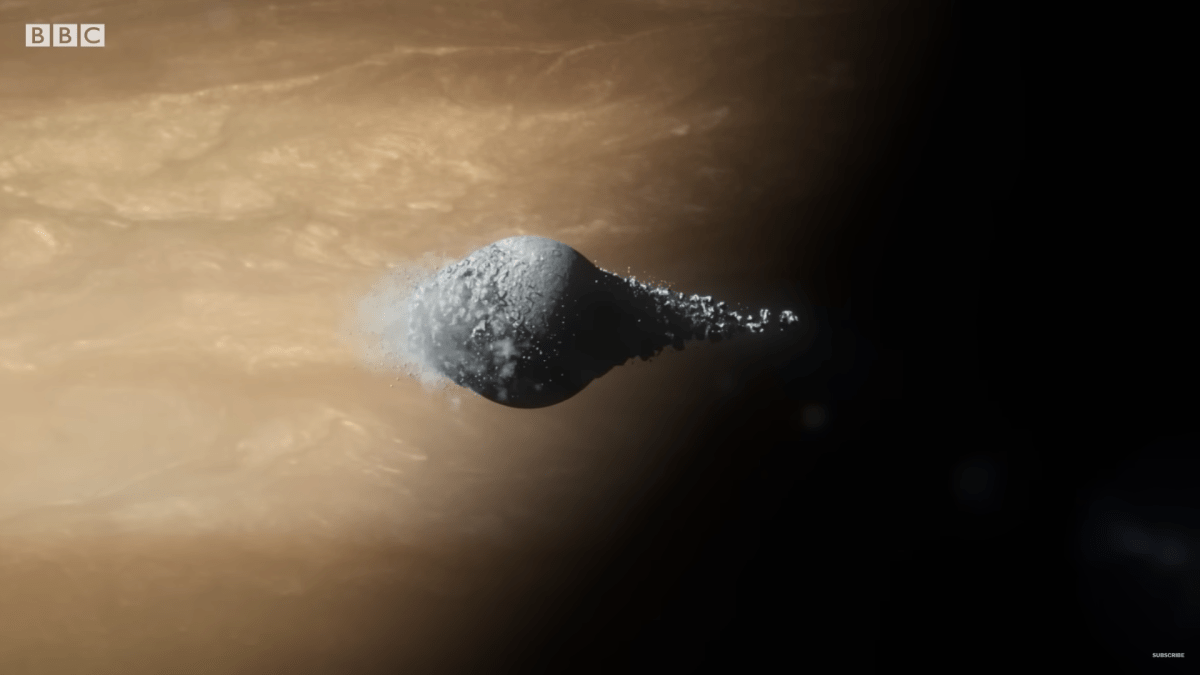
A once-coherent icy moon may have drifted too close to Saturn and crossed the Roche limit, a critical boundary inside which tidal forces exceed a body’s self-gravity. As a result, the moon could have been torn apart into countless fragments, eventually spreading and flattening into rings.
Leftover Building Blocks:
Some researchers suggest the rings could be remnants of the primordial material that never formed into a full-fledged moon. These debris fields, made mostly of ice, remained in orbit around Saturn for billions of years.
Cometary Encounters:
Grazing encounters with comets might have deposited icy material into orbit. Over millions of years, repeated events could have enriched and reshaped the rings.
From an engineering perspective, these scenarios revolve around stability criteria and orbital mechanics. Each theory relies on understanding how gravitational forces, energy distributions, and angular momentum play out over cosmic timescales.
How can you really shatter moon? And who is Roche?
The Roche limit is a critical concept that directly explains how a large body, like a moon, can be ripped apart by tidal forces (gravitational force exerted from external planet) near a massive planet like Saturn. It is defined as the distance from the center of a planet at which the tidal forces exceed the gravitational self-attraction of a satellite held together only by its own gravity. If a satellite ventures inside this limit, it can disintegrate into smaller fragments, forming a ring system.
But, why only Saturn has rings?
Jupiter, Uranus, and Neptune also have rings, but these are faint and less massive compared to Saturn’s. Why is Saturn’s system so dramatic? Evidence suggests that Saturn’s rings are relatively young—only a few hundred million years old. A relatively recent catastrophic event might have created a dense, bright ring system that has not yet had time to erode or disperse.
Other gas giants may have had equally grand rings in the distant past. Over billions of years, those rings could have dissipated due to particle collisions, interactions with solar radiation, or gravitational scattering. In short, Saturn’s rings might be caught in a transient “sweet spot” where conditions allow them to be large, bright, and stable enough for us to observe today.
Cassini’s final gift for earth.
The Cassini spacecraft was a triumph of interplanetary engineering. During its final orbits, it passed between Saturn and its rings, making high-resolution measurements of ring mass, composition, and gravitational fields. Among its key findings: Saturn’s rings are less massive and younger than previously thought, reinforcing the idea that they may have formed from a recent catastrophic event.
Future missions and next-generation telescopes—both ground-based and space-based—will refine our knowledge. Improved computational models, aided by advanced algorithms and high-performance computing, will let us test new hypotheses about the rings’ formation and evolution. By integrating planetary science with robust engineering principles, we may one day arrive at a more definitive explanation of how and why Saturn’s rings took their current shape. Until then, keep learning at NotRocketScience!
TL;DR.
Generated using AI.
- Saturn’s rings are composed mainly of ice particles, ranging from dust-like grains to boulder-sized chunks, orbiting according to Kepler’s laws.
- They likely formed when a moon or icy body drifted too close to Saturn, crossing the Roche limit and breaking into fragments, or possibly from leftover materials that never coalesced into a moon.
- Compared to other gas giants, Saturn’s rings are relatively young, bright, and massive, possibly due to a recent catastrophic event.
- NASA’s Cassini mission revealed critical insights into the rings’ composition, age, and mass, underscoring their transient, evolving nature.








 Not Rocket Science!
Leave a comment