
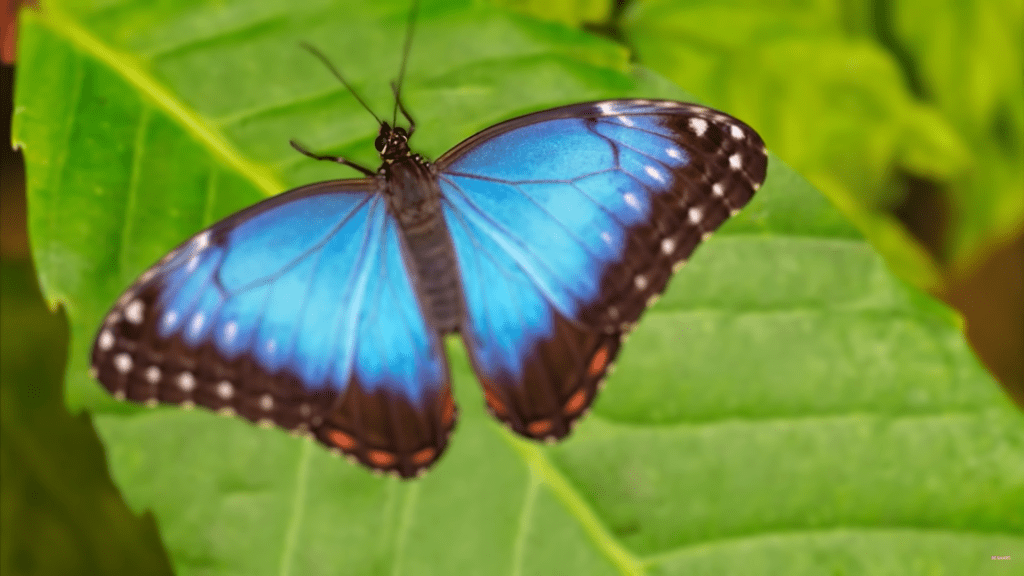
I am here to blow up your mind. This is something that will strike you like thunder and you might start to question what is reality and what is illusion. The phenomenon of blue butterfly wings is a stunning example of how color can arise from NO color. Yes, I am NOT fooling around here. This article is exactly about this, understanding the mysteries of nature.
Colors in Nature.
The vibrant colors on a butterfly’s wings serve more than just a visual delight; they play a crucial role in survival and communication. These colors can warn predators of toxicity, camouflage the butterfly against predators, or attract mates. The diverse patterns and hues are also used to regulate body temperature, as darker colors can absorb more heat. This array of purposes shows how essential colors are to a butterfly’s daily life and evolutionary success.

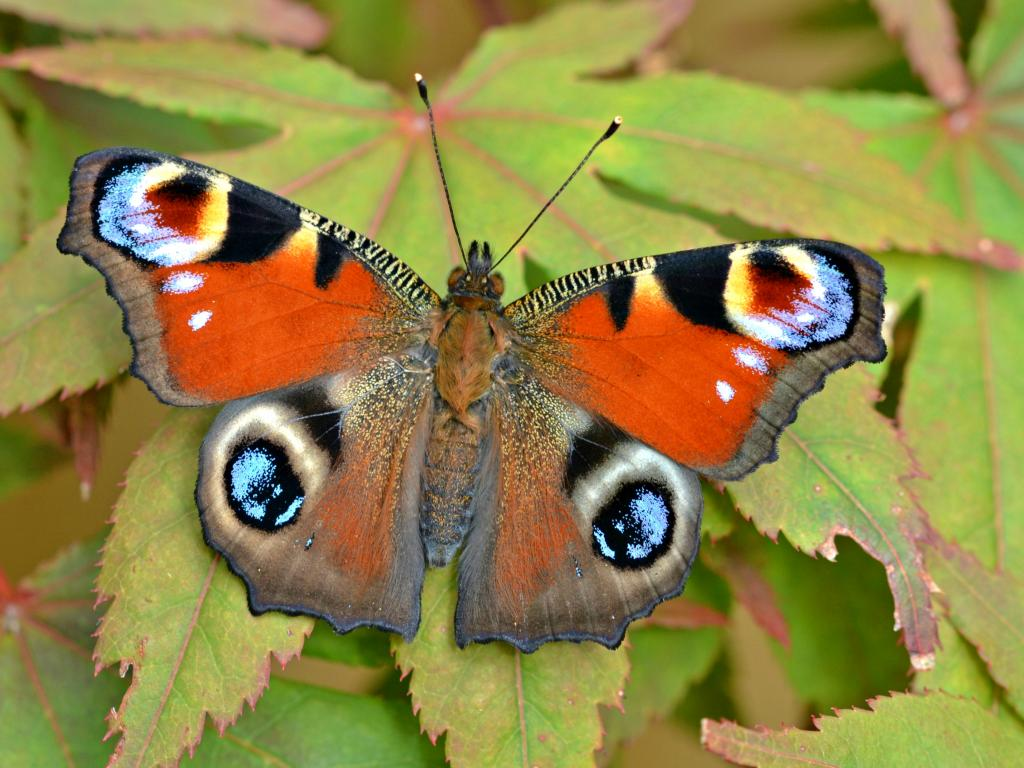
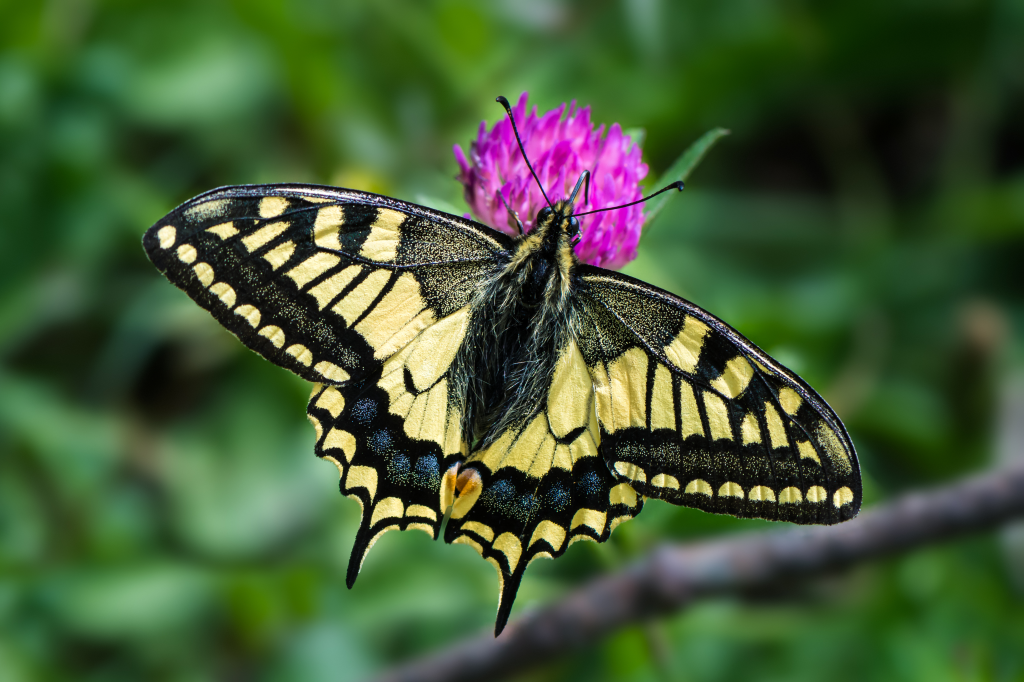
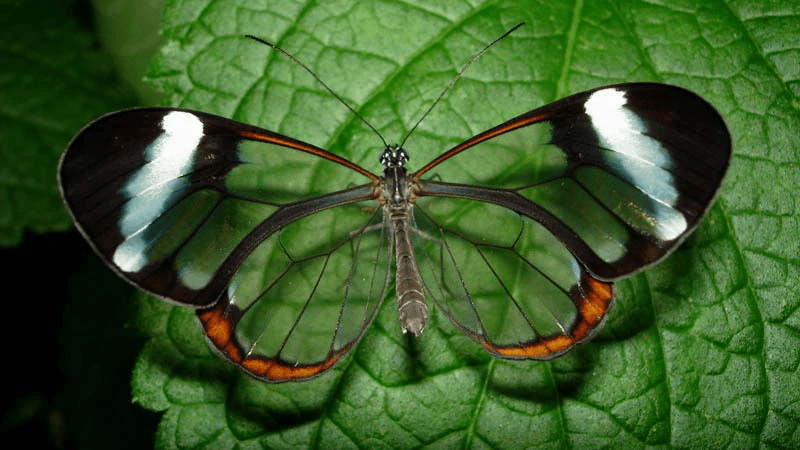
Pigmentation in butterflies involves specific chemical compounds within the scales of their wings that “absorb” certain wavelengths of light and reflect others, thereby producing visible colors. These pigments are usually derived from the butterflies’ diets during their larval stages and are incorporated into their wing scales as they develop into adults. Common pigments include melanin, which gives darker colors like browns and blacks, and carotenoids, which can produce yellows, oranges, and reds.
You might be wondering, “Okay, so why the fuss about the blue colored Butterfly?!” which brings us to mystery of this issue! Pigmentation is NOT the only way of acquiring colors in the nature. And this is where the Blue Morpho Species stands apart from other butterflies.
Before we can understand the underlying issue, let us understand a basic optics method, X-Ray Crystallography!
What is X-Ray Diffraction?
X-ray crystallography is a powerful scientific technique used to determine the atomic and molecular structure of a crystal. By directing X-ray beams at a crystal and measuring the angles and intensities of the rays that are scattered off the crystal lattice, researchers can produce a three-dimensional picture of the electron density within the crystal. This method reveals not only the positions of the atoms within the crystal but also their chemical bonds, their disorder, and various other information. Since the development of X-ray crystallography in the early 20th century, it has been fundamental in the study of materials, biological molecules, and minerals, significantly advancing fields such as chemistry, physics, biology, and materials science.
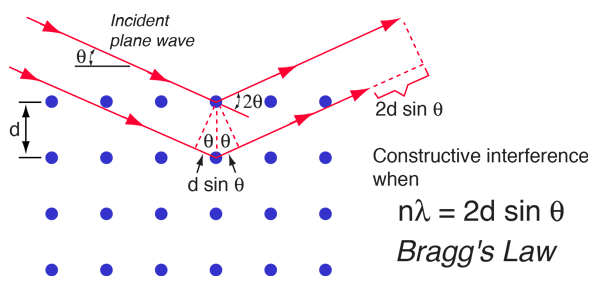
One of the key applications of X-ray crystallography is identifying the interplanar distances in a crystal lattice, which are critical for understanding the crystal structure and its properties. The interplanar distance, or the distance between successive crystal planes, can be determined from the diffraction patterns produced when X-rays are diffracted through the crystal.
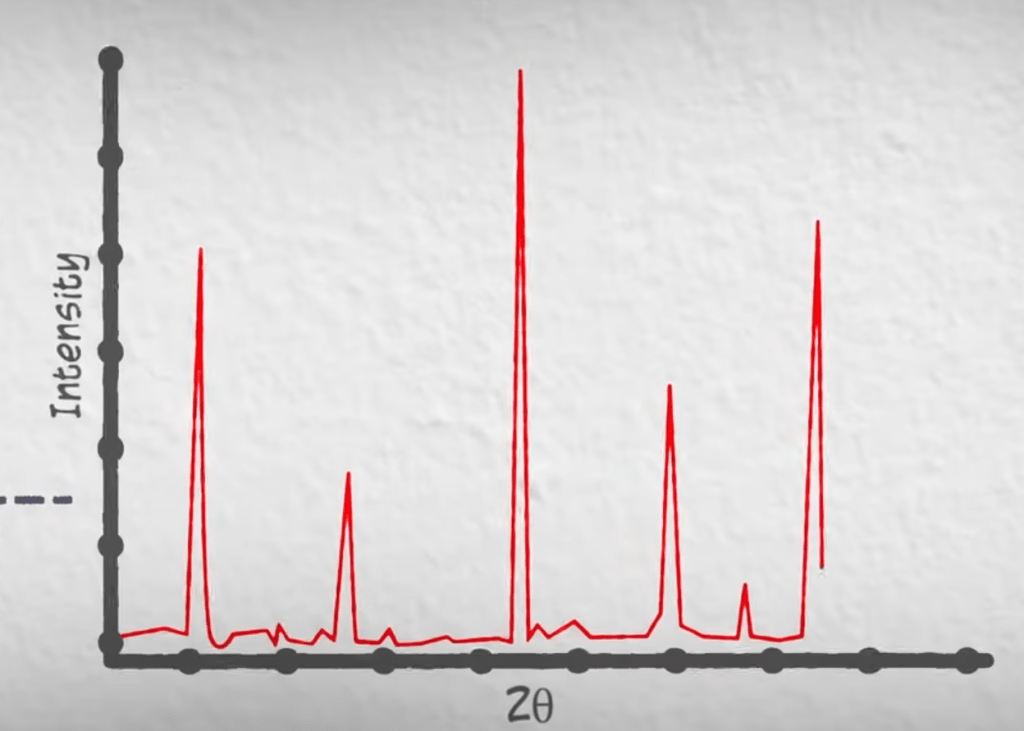
By applying Bragg’s Law, which relates the wavelength of electromagnetic radiation to the diffraction angle and the spacing between layers of atoms, scientists can precisely measure these distances. Accurate knowledge of interplanar distances is essential for characterizing the structural and physical properties of materials, aiding in everything from drug design to the development of new materials with specific properties.
Coloring without Pigmentation.
And what does it have to do with our Blue Butterfly? Good question! You remember I told that, Pigmentation is not the only way of coloring in nature? Here comes the gist of this article. The other way of manipulating the perceived color is via the structural design! Wait, What?! Now if we try to relate this to our small physics discussion we had, the light diffracted from the crystal structure is based on interplanar distance and the angle of diffraction and its constructive interference condition. So keeping the planar distance constant and changing the diffraction angle, one should expect different wavelength to make constructive interferences and show up on the screen.
Do you understand what does this mean? Think for a moment. Without changing the object, if you look at it from a different angle you perceive its color differently! And my friend this is the magic of optics at play!
Now you might have already figured where this is going, and YES! You are right. The color of the Blue Morpho Butterfly comes from its structure rather than its pigment. The specific type of light reflection involved in this phenomena is known as coherent scattering. In this process, the light waves scattered by the upper and lower surfaces of the chitin layers interfere with each other. For blue light, the waves enhance each other, making the blue vividly visible, while other wavelengths cancel out. This selective reinforcement is crucial for the pure, vibrant color seen in the wings.
The Colorless “Blue” Structures!
What’s remarkable about the blue coloration of butterfly wings is that the structures themselves are colorless. The chitin and air layers do not possess inherent colors; they are clear. The blue hue emerges solely from the way these layers are arranged and interact with light. The thickness and spacing of the layers are finely tuned to preferentially reflect blue light, a process finely honed by evolutionary pressures.
The following are some increasingly zoomed images captured of the Blue Morpho’s wings.
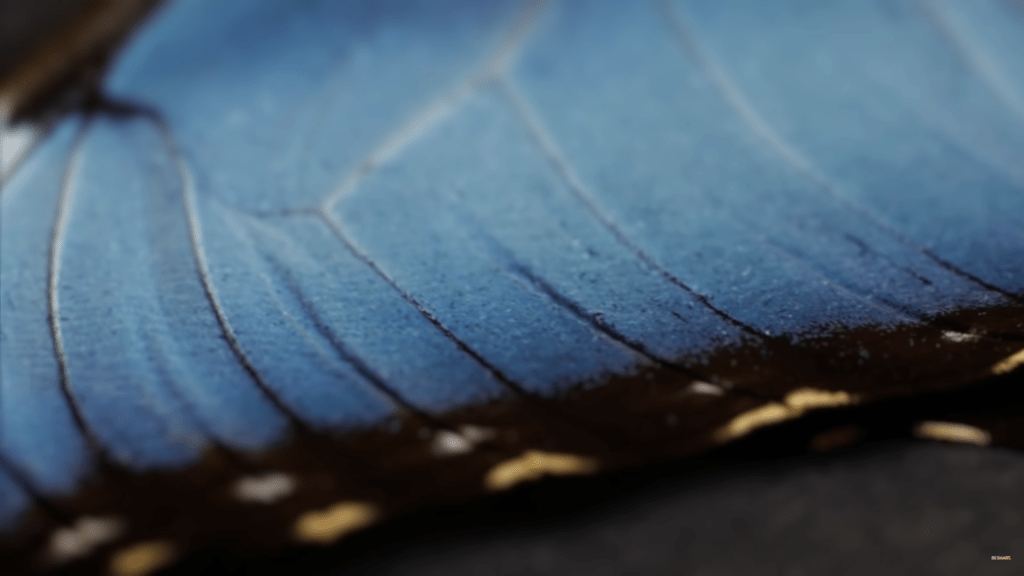
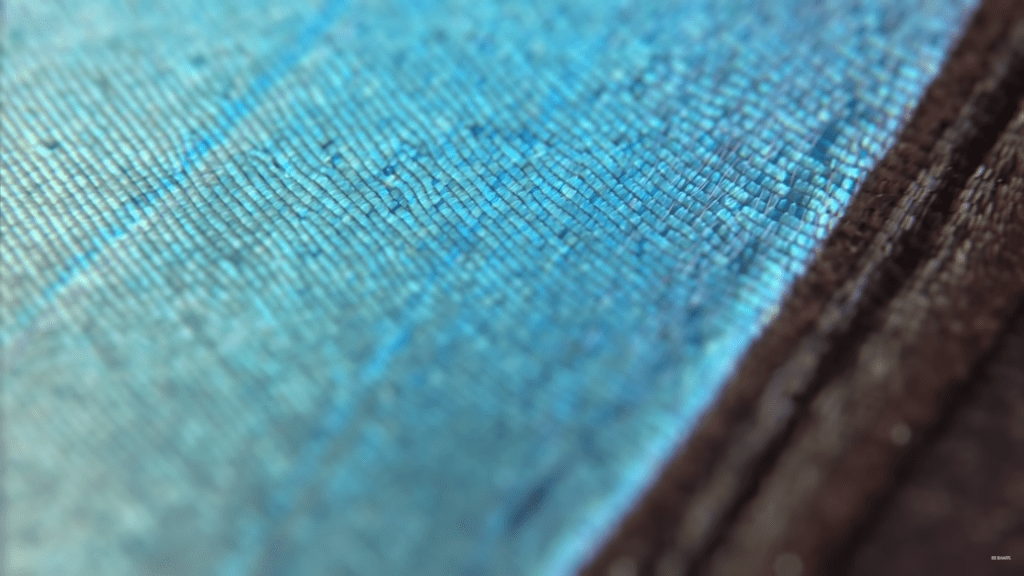
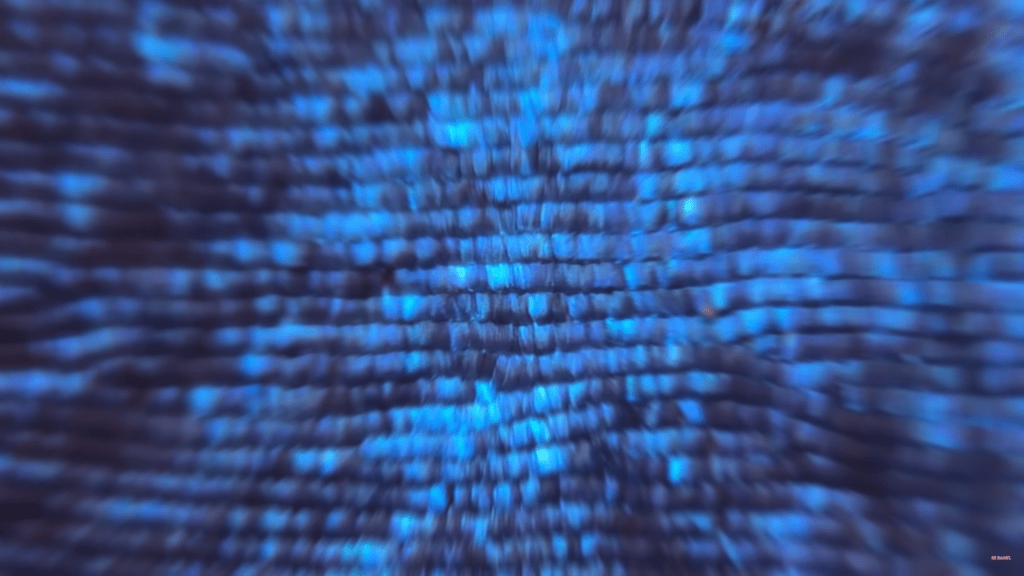
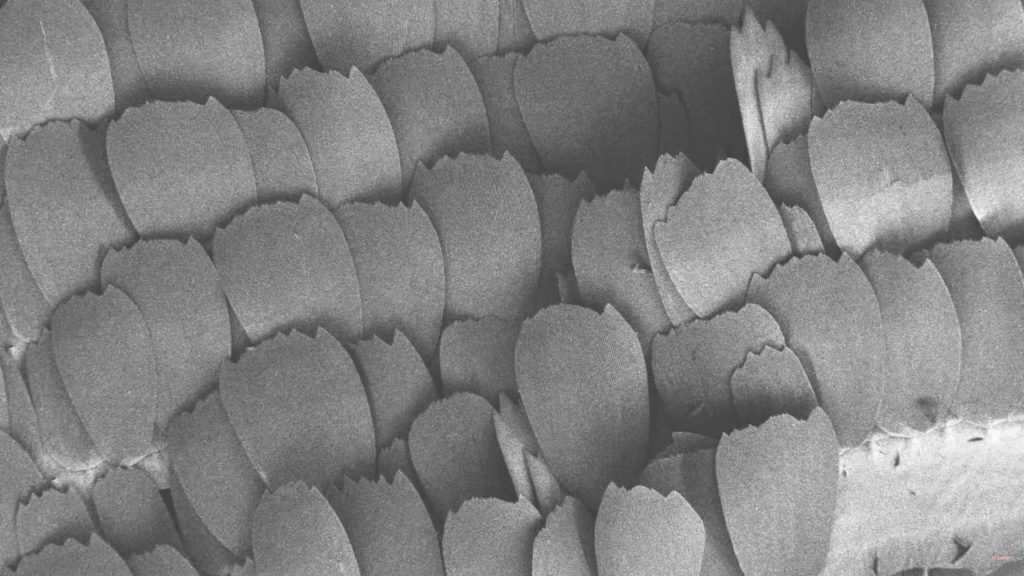
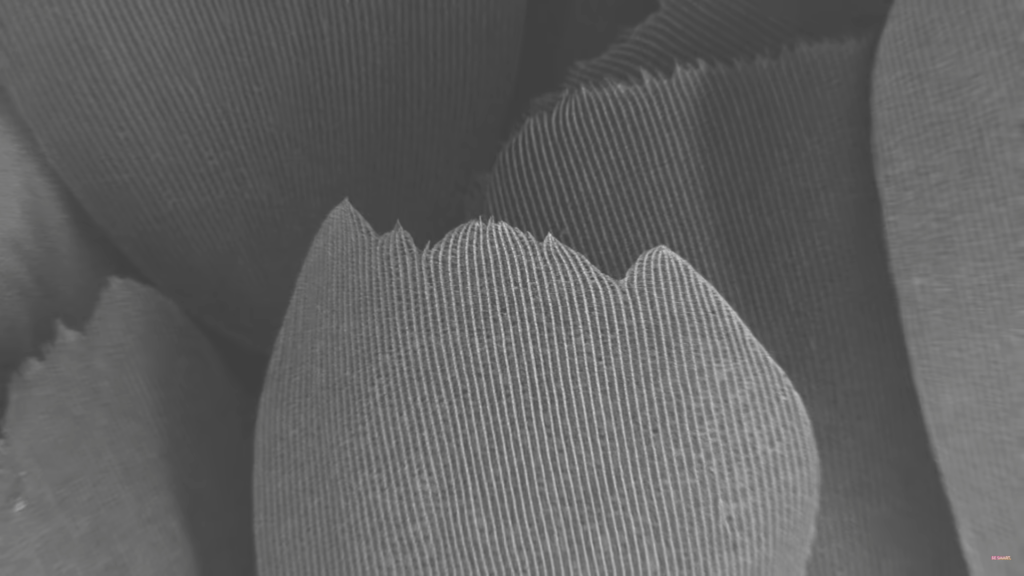
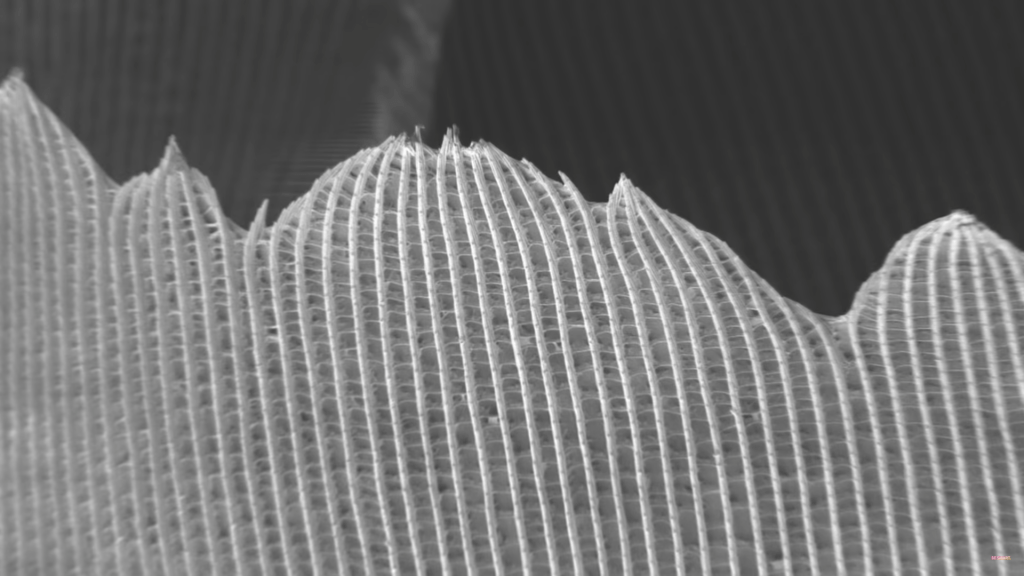
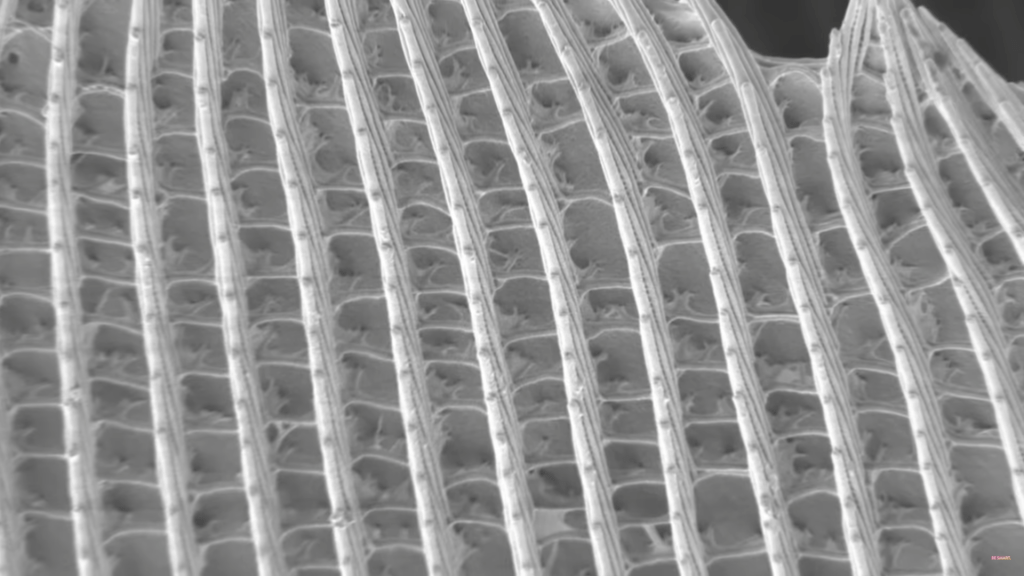
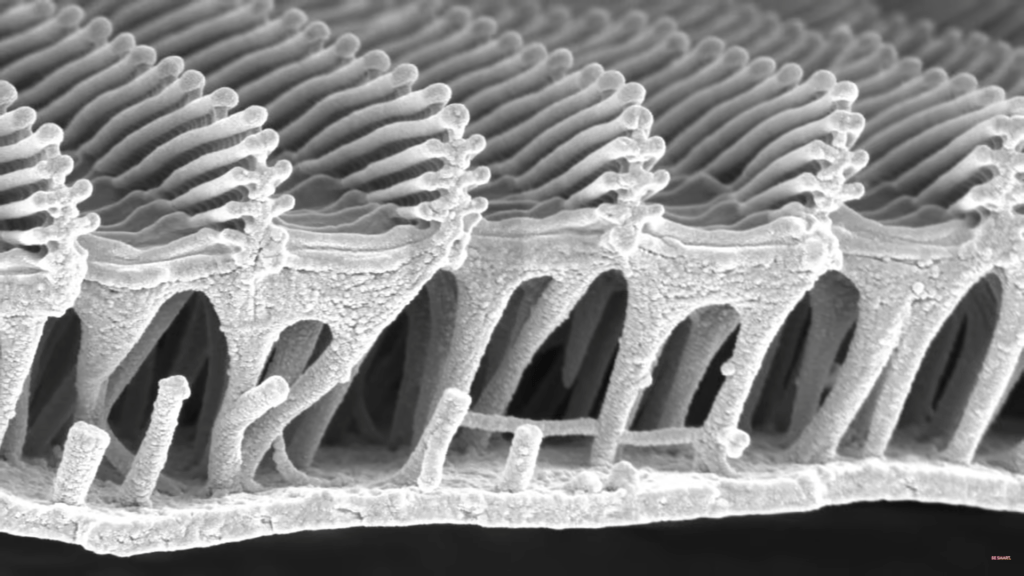
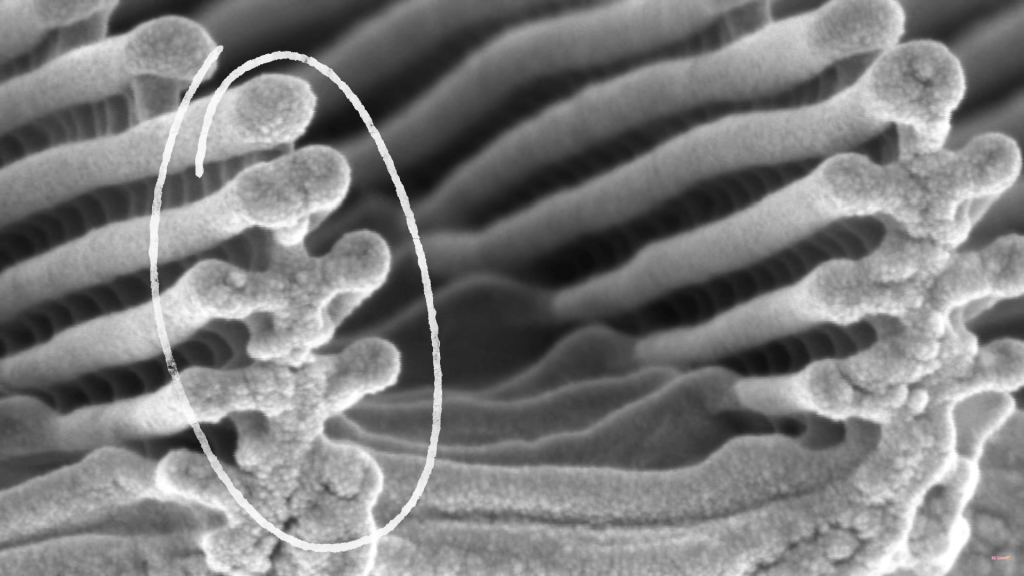
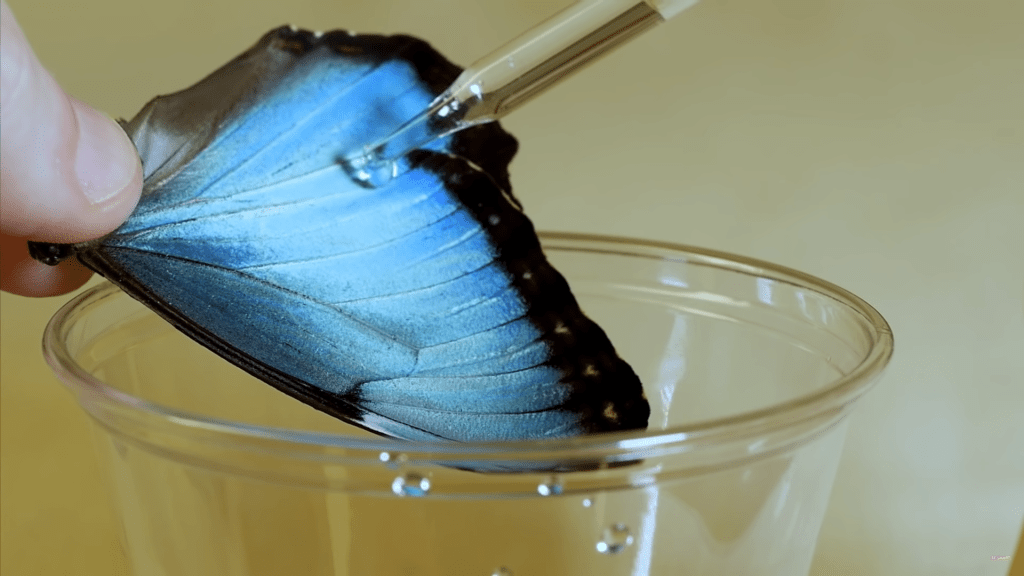
Now that we know how exactly these wings are structured, we might get a little creative and experiment a bit, further validating our theories. We know the constructive interference is because of the optical density of the air and the evolved structural path. So if I somehow change the optical path of the light travelling, we should be able to change the wavelength for the constructive interference. Let us try to drop alcohol on the blue dry wing. And here is how it looks! See the wet part of the wing, it is not blue any more, it is because we changed the refractive index of the wings be replacing air with alcohol.
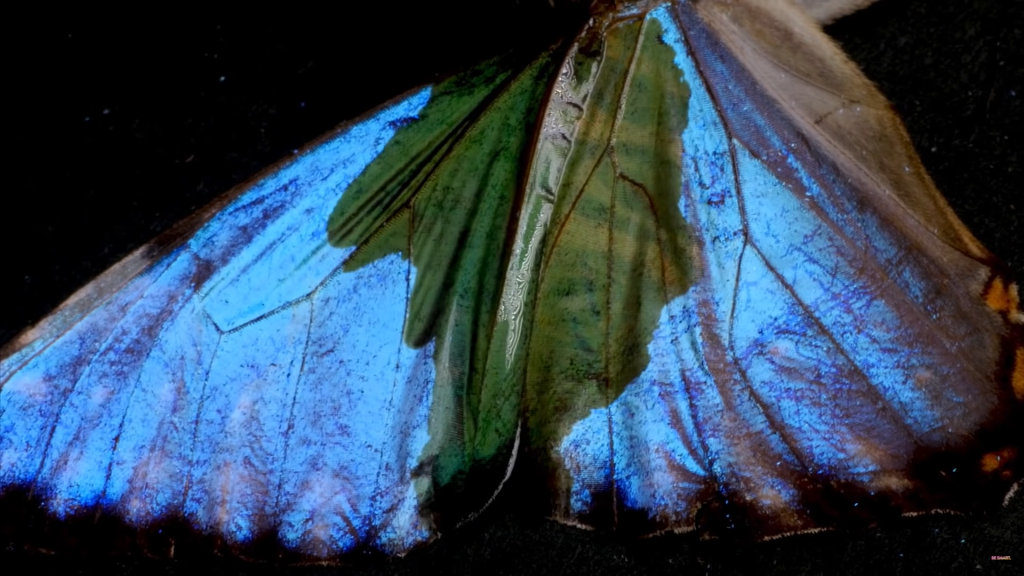
So does that mean in rainy seasons, Blue Morpho Butterflies have to extra cautious about keeping there wings dry to keep it functional as well as blue? Well NO! Because you can’t get it wet in the first place itself. These structures are hydrophobic in nature, which means water will glide through on them keeping them safe and vibrant in any weather condition.
Path Forward.
Understanding the physics behind the blue butterfly wings not only satisfies scientific curiosity but also has practical implications. For instance, biomimicry of this natural structural coloration can lead to innovations in materials science, such as creating more vibrant colors in textiles without the use of dyes, or developing surfaces that change color based on the viewing angle. Watch the exciting video covering the same issue here in the following YouTube Video.
Till we explore more, be curious at NotRocketScience!
TL;DR.
Generated using AI.
- Colors in Nature: Butterfly wings’ colors are crucial for survival and communication, serving purposes like warning predators, camouflage, mating, and thermoregulation.
- Butterfly Species and Their Strategies:
- Monarch Butterfly: Signals toxicity with its orange and black colors.
- Peacock Butterfly: Uses eye spots for mimicry to deter predators.
- Swallowtail Butterfly: Uses tailed wings for mimicry and defense.
- Glasswing Butterfly: Utilizes transparency for camouflage.
- Pigmentation Process: Butterfly wing colors come from pigments like melanin (dark colors) and carotenoids (yellows, oranges, reds), derived from their larval diet and incorporated during development.
- Blue Morpho Mystery: The Blue Morpho butterfly’s stunning blue does not come from pigmentation but from structural coloration—light interacting with the microscopic structure of the wings.
- X-Ray Crystallography: This technique is used to understand the atomic structure of crystals, including measuring interplanar distances crucial for material properties.
- Color and Structure: The color seen in Blue Morpho butterflies arises from the structural arrangement in their wings, specifically through coherent scattering of light, enhancing blue light and cancelling out others.
- Hydrophobic Nature: Blue Morpho wings are hydrophobic, repelling water to maintain functionality and color integrity in wet conditions.









 Not Rocket Science!
Leave a comment