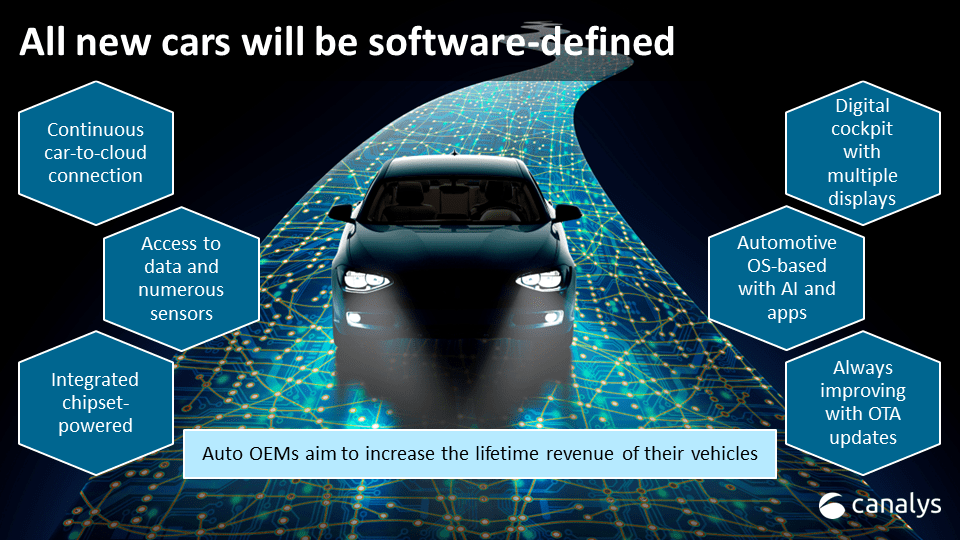
A software-defined vehicle (SDV) prioritizes software over hardware in its operation, unlike traditional vehicles that are built around a mechanical framework. SDVs use software to enable vehicle functionality, which is transforming the automotive industry’s approach to vehicle design, development, manufacturing, and support. A similar technological shift can be seen in cell phones: traditional vehicles are comparable to feature phones, which offer limited functionality, whereas SDVs are like smartphones, capable of constant evolution and adaptability through ongoing software updates, which is beneficial for the automakers/OEMs since it will increase the lifetime avenue of their vehicles. This software-driven transformation is viewed as a significant evolution in the automotive industry, paving the way for further technological advancements, such as autonomous vehicles (AV).
Overall Architecture.
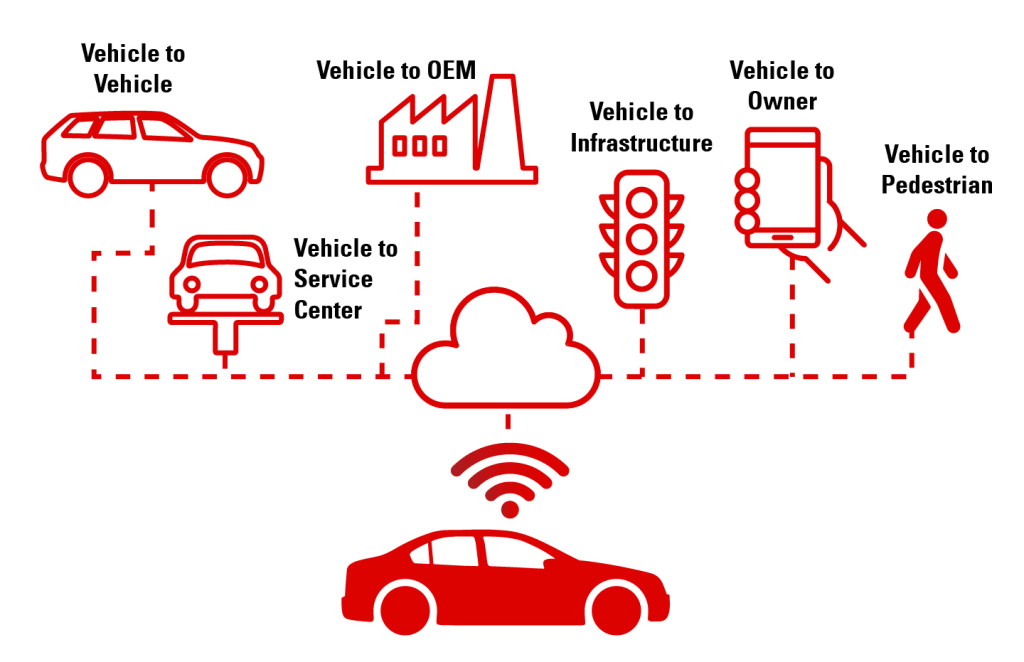
The architecture of a software-defined vehicle (SDV) is a comprehensive framework that goes beyond the physical vehicle itself, encompassing a wide array of backend systems and supporting infrastructure designed to enhance connectivity and functionality. Here are the key components of this architecture:
- Telecom Equipment and Connectivity: These systems are crucial for enabling real-time data exchange between the vehicle and cloud-based services. They utilize advanced telecommunications technology to ensure that vehicles can continuously communicate with network services, enabling features such as remote diagnostics, over-the-air updates, and real-time traffic updates.
- Backend Systems: These systems are maintained by the vehicle manufacturer and play a vital role in the SDV architecture. They store vast amounts of data from the vehicles, which can include everything from performance metrics to user preferences. These servers are also responsible for managing and deploying software updates that can enhance vehicle functions or address security vulnerabilities. Additionally, they provide critical backup capabilities to ensure data integrity and availability.
- Surrounding Infrastructure: This component of the architecture refers to an extensive network of external systems and technologies that interact with the vehicle. Roadside units, for example, can communicate with vehicles to provide information about road conditions, traffic updates, or accidents. Smart city systems integrate with vehicles to optimize traffic flow, reduce energy usage, and improve overall city infrastructure efficiency. This infrastructure also includes charging stations for electric vehicles, parking management systems, and other technologies that support the dynamic functionality of SDVs.
Overall, the architecture of a software-defined vehicle is designed to create a synergistic ecosystem where the vehicle, its environment, and the backend systems are interconnected, allowing for a more adaptable, efficient, and advanced driving experience. This holistic approach not only enhances vehicle operation but also supports broader technological advancements such as autonomous driving and smart city integration.
Software Layer.
The software layer forms the core of the software-defined vehicle (SDV), functioning as the primary enabler of various software systems that manage and control the vehicle’s functionalities. This layer is sophisticated and critical for the smooth and efficient operation of the SDV. Here are the essential components of the software layer:
- Embedded Operating System (OS): The embedded OS serves as the brain of the SDV. It is responsible for managing both critical functions that ensure the vehicle’s operational safety and efficiency, and general operations that handle everyday tasks. The OS must be highly reliable and secure, capable of real-time performance to handle tasks like sensor data processing and immediate response commands, crucial for safety-critical functions such as braking and steering.
- Middleware: Middleware in SDVs acts as a crucial intermediary layer that facilitates seamless communication between the vehicle’s applications and its operating system. It handles the standardization of data exchange, abstracts the complexities of different hardware systems for the applications, and ensures that higher-level software can run independently of hardware-specific implementations. This layer enhances system interoperability and modularity, allowing for easier updates and maintenance.
- Applications: The application layer includes the various programs that directly provide functionalities experienced by the driver and passengers. This includes advanced driver-assistance systems (ADAS) which enhance vehicle safety through features like automatic braking, lane keeping, and adaptive cruise control. Navigation systems provide real-time, GPS-driven directional guidance while integrating traffic and road condition data. In-vehicle infotainment systems offer media playback, smartphone integration, and internet connectivity to enhance the in-car experience. Lastly, vehicle connectivity features enable the SDV to communicate with external devices and systems, including other vehicles and road infrastructure, thereby increasing the range of functionalities like remote diagnostics and over-the-air software updates.
Together, these components ensure that the software layer not only supports the current functionality of the vehicle but also provides a scalable platform for future enhancements and integrations, thereby maintaining the vehicle’s relevance and performance in the rapidly evolving automotive landscape. This layer’s adaptability and expandability are key to realizing the full potential of software-defined vehicles in the context of smarter, safer, and more efficient transportation systems.
Hardware Layer.
In software-defined vehicles (SDVs), while the primary focus might be on software capabilities, the hardware layer remains fundamentally essential to the vehicle’s operation. This layer includes all the physical components that are crucial for the vehicle’s functionality, performance, and safety. Here’s a detailed look at these components:
- Engine, Transmission, and Other Powertrain Components: These are the primary components responsible for the vehicle’s propulsion. The engine, whether it is a traditional internal combustion engine, a hybrid system, or a fully electric motor, provides the necessary power. The transmission systems then deliver this power effectively to the drive wheels. In SDVs, these components are often controlled by advanced software that optimizes performance, efficiency, and emissions.
- Sensors, Cameras, Radars, and Electronic Control Units (ECUs): Sensors are the eyes and ears of the SDV, providing critical data about the vehicle’s environment and internal states. Cameras and radars play a vital role in safety and navigation, enabling features like ADAS and autonomous driving. ECUs act as the main processing hubs, managing various electrical systems throughout the vehicle. Each ECU can control a specific function such as airbags, braking systems, and power windows, or more complex tasks like engine management and stability control.
- Chassis, Suspension, and Other Body Components: The chassis forms the base frame of the vehicle, while the suspension system supports ride quality and handling. These components are integral to the vehicle’s physical integrity and driving dynamics. In SDVs, these components can be enhanced by software controls to improve safety, comfort, and performance, adjusting to different driving conditions in real-time.
- High-Performance Computing Systems: To handle and process the enormous amount of data generated by the sensors, high-performance computing systems are embedded within the vehicle. These systems need to have powerful processing capabilities to run complex software applications and perform real-time data analysis. They support everything from basic vehicle operations to advanced functionalities like autonomous driving, connectivity, and infotainment systems.
Overall, the hardware layer in SDVs does more than just support basic operations; it integrates deeply with the software to enable advanced functionalities and innovations. This integration allows for a more responsive, efficient, and safer driving experience, highlighting the symbiotic relationship between hardware and software in the modern automotive landscape.
Benefits and Challenges of Software-Defined Vehicles.
Software-defined vehicles (SDVs) are poised to bring about significant transformations within the automotive industry. These vehicles, empowered by advanced technologies, present both promising benefits and notable challenges. While SDVs represent a significant advancement, addressing these challenges is crucial to ensure a safe, secure, and reliable future for this technology.
Benefits of Software-Defined Vehicles:
- Enhanced Performance and Efficiency: Software in SDVs can continuously monitor engine parameters, optimize fuel or battery pack efficiency, and refine driving dynamics. This ongoing optimization leads to better performance and greater energy efficiency, adapting in real-time to driving conditions and usage patterns.
- Improved Safety: Advanced driver-assistance systems (ADAS) powered by sophisticated software can react more quickly than humans in critical situations, potentially reducing the likelihood and severity of accidents. Software enhancements can also include predictive collision avoidance and automated emergency response systems.
- Evolving Capabilities: Unlike traditional vehicles, the functionalities of SDVs can be upgraded and expanded through over-the-air (OTA) software updates. This means that new features, performance improvements, and security updates can be installed remotely, keeping vehicles current with the latest advancements without needing physical modifications.
- Personalized Experience: SDVs can offer a highly personalized driving experience. Software configurations allow for customized dashboards, ambient lighting, and tailored in-car infotainment systems that adapt to the preferences of the driver and passengers, enhancing comfort and enjoyment.
- Predictive Maintenance: By monitoring the health of various vehicle systems, software can predict and alert owners to potential issues before they become serious problems, potentially avoiding costly repairs and downtime.
Challenges of Software-Defined Vehicles:
- Software Complexity: The complexity of the software required to manage an SDV is vast, which increases the risk of bugs, glitches, and vulnerabilities that could compromise vehicle functionality or safety.
- Cybersecurity Threats: With the central role of software in SDVs, robust cybersecurity measures are essential to protect against potential cyber-attacks. This includes securing both the vehicle’s software and the communication channels used for OTA updates.
- Data Privacy Concerns: SDVs collect a large amount of data to optimize performance and provide personalized services. This raises concerns regarding data privacy and security, necessitating clear regulations and robust data protection practices to maintain user trust.
- Modular Hardware and Software Integration: Traditional vehicle hardware is often closely tied to the software it supports, which can limit flexibility. Moving towards a modular design would allow software applications to function more independently of hardware, facilitating easier upgrades and repairs.
- Technical Expertise Gap: As the automotive industry shifts towards software-centric models, there is a growing need for new skills in software development, cybersecurity, and data management. Attracting and developing talent in these areas is crucial for the future growth of SDVs.
Implementing Software-Defined Vehicles.
Transitioning to SDVs involves complex changes across the automotive industry. Automakers are rethinking how they integrate software with hardware components, making hardware more modular to accommodate frequent software updates and improvements. This shift requires automotive suppliers to prioritize cybersecurity and data privacy to protect against potential threats. Additionally, as vehicles increasingly handle sensitive data, establishing clear guidelines on data ownership and privacy is essential.
Moreover, adopting new design and testing methodologies will be vital to accommodate the unique requirements of software-centric vehicle systems. Industry-wide standards for software platforms could facilitate faster innovation and broader adoption of SDVs. These changes demand rigorous testing and validation processes to ensure that the vehicles are safe, reliable, and ready for the road.













 Not Rocket Science!
Leave a comment