
Yes, this is indeed as stupid as it sounds from the headline of this article. And you are here because it intrigued you too. So I will present you the question, which was posted by our professor in the first year at IIT Bombay,
What will happen, if I create a spark inside a bucket full of kerosene?
Context Time, Yay!
Red Kerosene.
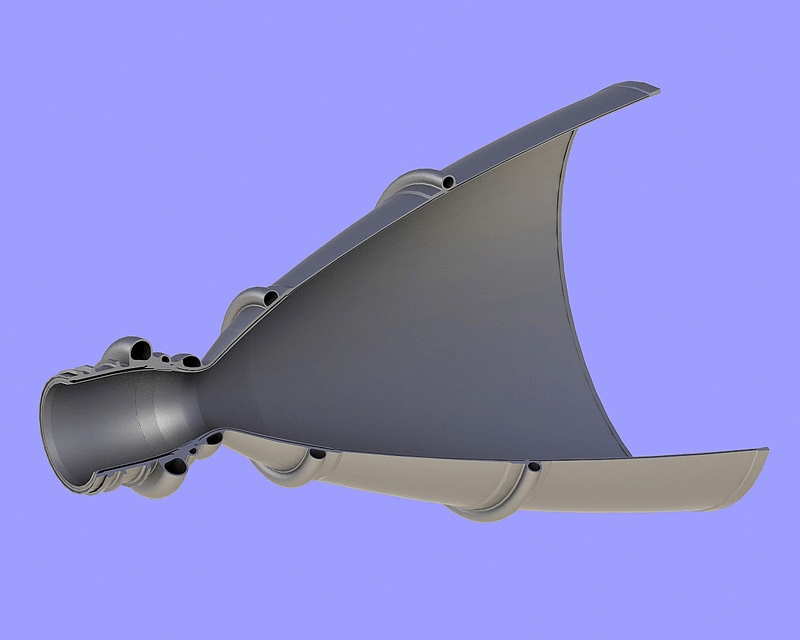
All awesome large heavy rocket boosters use RP-1 as there fuel for all the thrust generation, and why is this relevant here, you may ask? You see, kerosene is RP-1, yada yada, yes where it is refined heavily, and other post processing. But you get the idea. And it is beautiful. Just have a look at it down below.
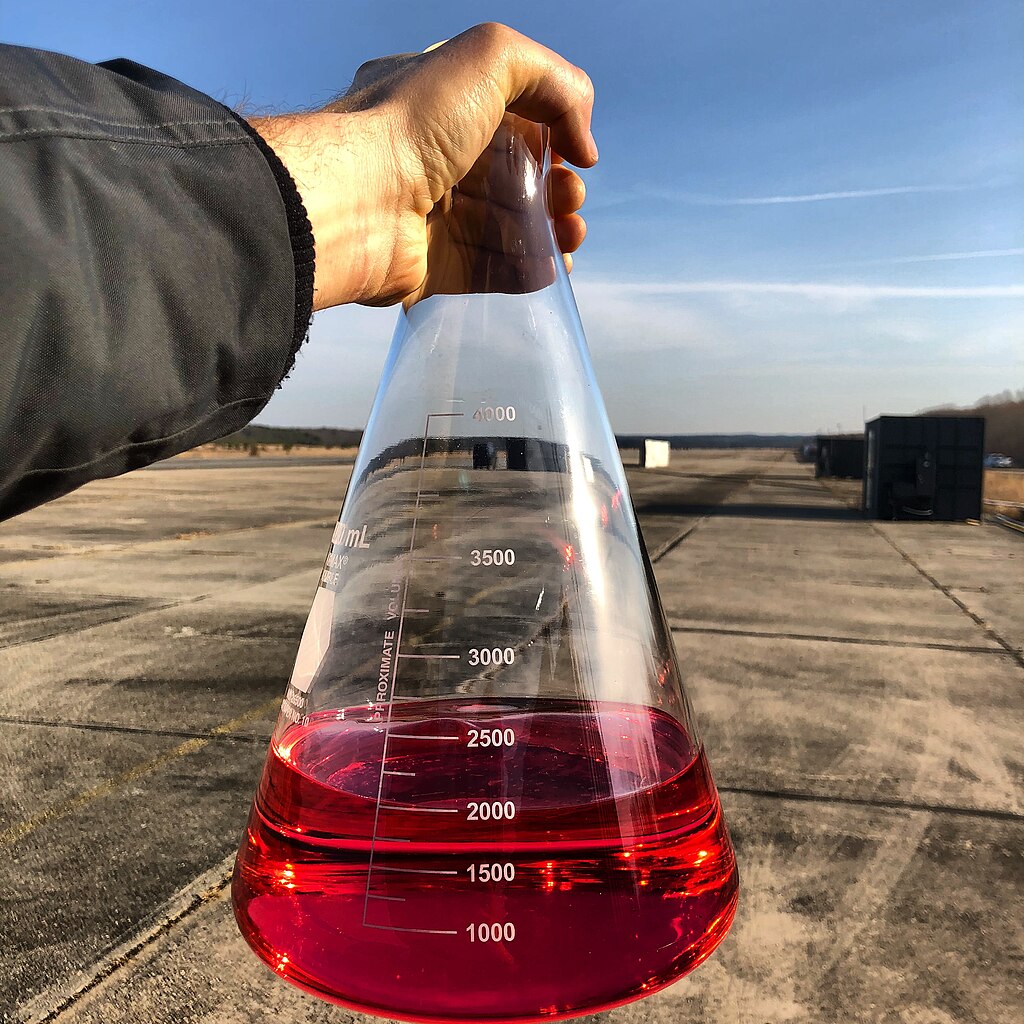
Source: Wikipedia (RP-1)1
Well, kerosene is not this beautiful. It is colorless, but you may have seen it in blue color. It is dyed by government under Public Distribution System to make it affordable and is differentiate from open market kerosene which is clear and more expensive.2
If you are still not convinced that kerosene is highly energetic compound capable of lifting thousands of kilograms of rockets into the space, maybe this example will be more suitable to any aviation head here. ATF, which stands for Aviation Turbine Fuel, also called jet-fuel, and as the name suggests, burns and gives the required high velocities for the aircraft to disappear in the vastness of the sky. And, as you might have already guessed it, ATF is again a refined form of kerosene.3
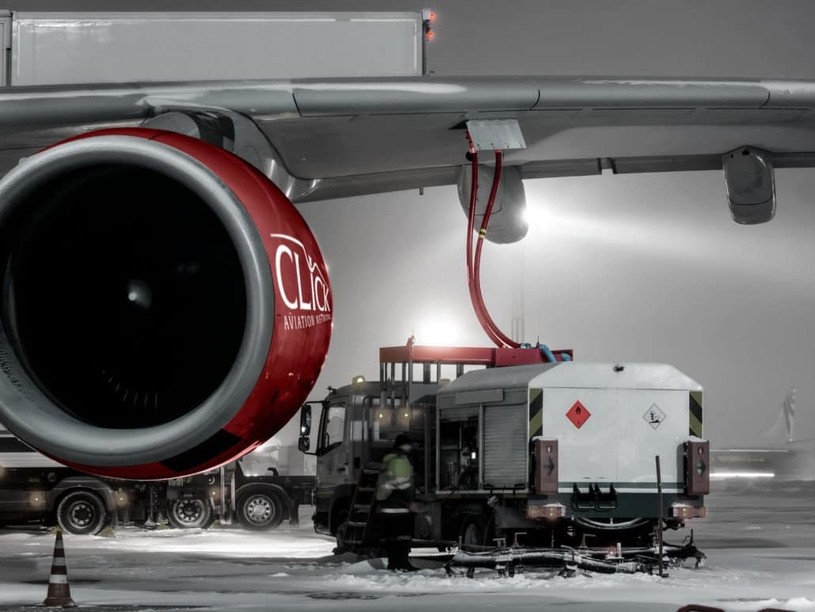
Source: LinkedIn4
Combustion Revisited.
Now seems an appropriate time to draw inferences from our understanding developed in former article discussing the basics of combustion and its effect on the rocket chamber design.
We discussed how any rocket propellant being used as a fuel is somewhat similar to the LPG (Liquified Petroleum Gas) cylinder that we are using in our household, well technically, I have been made to shift to PNG (Piped Natural Gas) when I shifted to Mumbai. But fundamental concept remains the same. You spark it, and Kabooom! Barbeque night food is ready.
Kerosene Burns.
Now, it should NOT be hard to imagine that lighting up kerosene will leads towards an exothermic reactions, generating heat fast enough that you are compelled to call it a combustion reaction and not an old-fashioned oxidation reaction.
So, what should have happened if I arced (or sparked) under a bucket full of kerosene? Please take a note, that we were dressed appropriately for this experiment. Well this was not “the” experiment, this was a small part of the experiment, which made a long lasting effect on, and I said, “Science”. Which finally took the shape of NotRocketScience.
Suspense Quenched.
You see, all of context built by now tries to point towards a situation where heart-trembling experiences might have unfolded, arc producing enormous energy, to start the chain reaction and burning the entire bucket of highly energetic fuel and hurt you badly in this process, which is an absolutely possible, and if you don’t understand physics, it might turn out this way only, so please don’t try this without supervision.
The hint lies in the word, “inside” a bucket full of kerosene. Have you guessed it already? If yes, directly head towards the comment section and share it with us.
If you didn’t get it right away, don’t worry, I was in the same boat, and luckily not in the same bucket. Revisiting the concepts from combustion, we had understood that to start a combustion reaction there are some elements which are crucial, namely, Fuel, Oxidizer, and Ignition source (Did I miss the fourth element?)
Have this been a situation when I arced on the surface of the kerosene, a disaster was inevitable. But, we had enough PhD students around us to take care of us. Yes the answer is, nothing really happens inside the kerosene. Just a series of bright flash from the arcing process and that is it. No Kabooom!
So what changed? If you observe clearly, we had fuel “inside” the bucket. We definitely had the arc, and thus the ignition source “inside” the bucket. We also had the oxidizer (i.e. air) but not “inside” the kerosene bucket. Air is ONLY present on the surface of the kerosene, whose supply is cut owing to the liquid nature of the kerosene. So the third element was not present for the combustion reaction to take place, hence NO combustion, and ONLY Arr Arr Arcing!
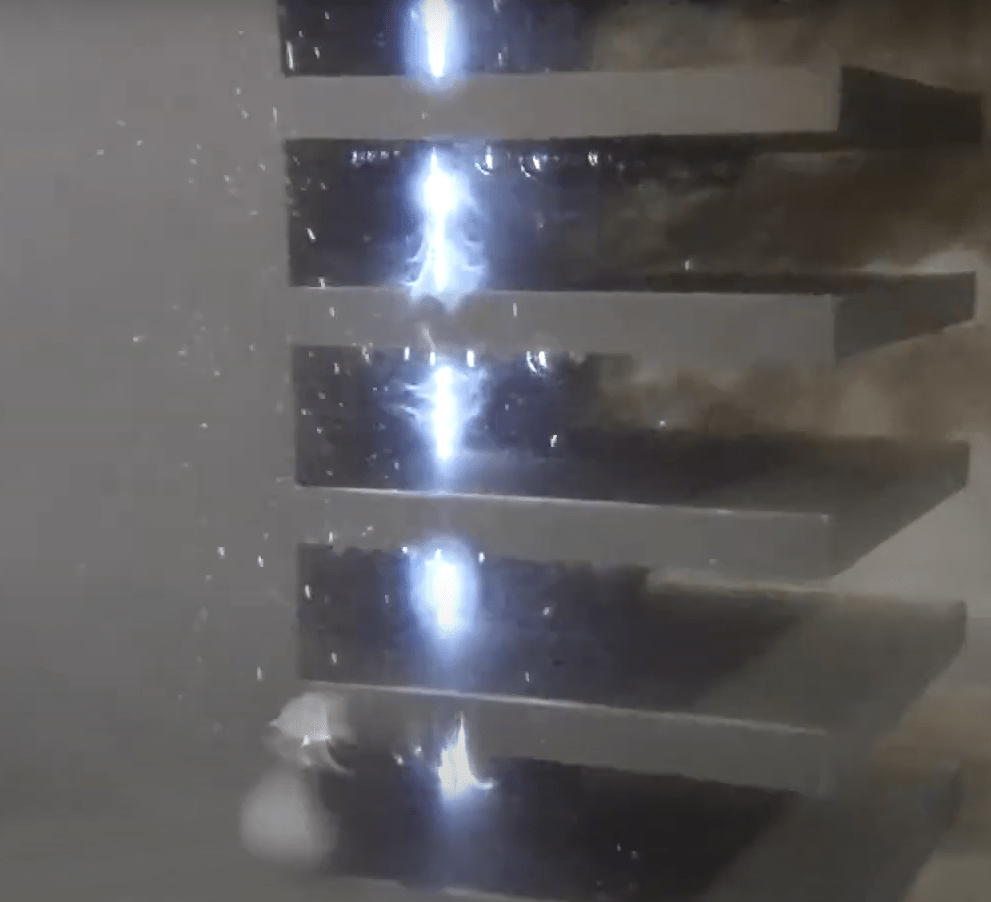
Source: YouTube
The complete video is embedded below for you to check it out and see for your self.
Source: YouTube
But why in the world PhDs IIT Bombay are arcing under kerosene?
And, what is the point of all this?
Arcing is a process where the electrons break through the dielectric (which is environment in which the terminal is present). In this process a high pulse of heat is released which is enough to melt the metal and thus remove it wherever undesired. Now you guessed it right. This was NOT a combustion laboratory, it was Machine Tool Laboratory in Mechanical Engineering IIT Bombay. I can go again ON and ON for the benefits of submerged kerosene machining but let’s save it for the next article.
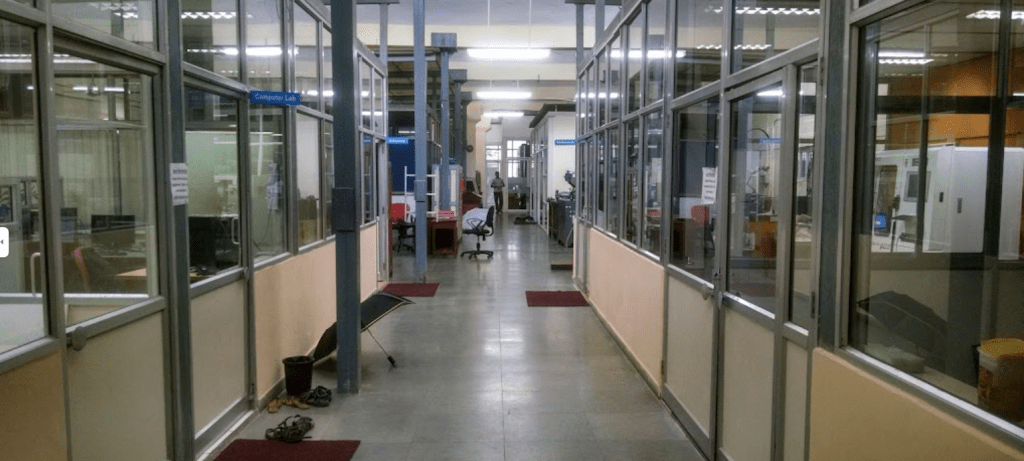
Source: Google Maps
Meanwhile, DON’T forget, Fuel, Oxidizer, and Ignition Source MUST all be present for the combustion to take place.
TL;DR.
- Question Setup: A professor posed, “What happens if you spark inside a bucket of kerosene?”
- Fuel Context: Kerosene, a high-energy fuel like RP-1 for rockets and ATF for jets, ignites with fuel, air (oxidizer), and an ignition source.
- Experiment Outcome: Sparking inside the bucket didn’t ignite the kerosene since no air (oxidizer) was inside—only arcing occurred.
- Key Insight: All three elements (fuel, oxidizer, ignition) are required for combustion, demonstrating why kerosene is safely used as a dielectric in EDM machining.
References.
- Wikipedia, “RP-1”
Accessed On: 11th November 2024. ↩︎ - Department of Food Civil Supplies & Consumer Affairs, “Superior Kerosene Oil“
Accessed On: 11th November 2024 ↩︎ - Wikipedia, “Jet Fuel”
Accessed On: 11th November 2024 ↩︎ - LinkedIn, “Significance of Aviation Turbine Fuel Testing“
Accessed On: 11th November 2024 ↩︎










 Not Rocket Science!

Leave a comment